stream
Stream
Short notes and things found along the way — links worth keeping, passages worth quoting, the occasional screenshot.
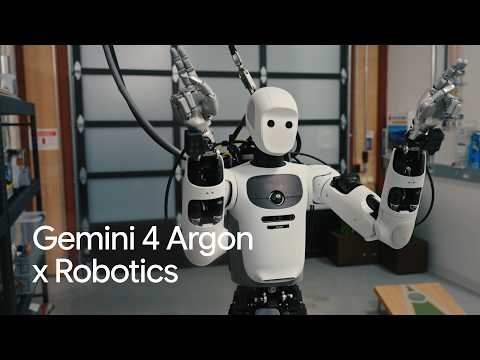
A humanoid robot practices tossing beanbags at a cornhole board while controlled or coached via Gemini 4 Argon, demonstrating the model's ability to translate visual feedback into physical motor adjustments for a real-world game.
 Play ORDINARY EXCELLENCE: The story of Grant Fisher Marcus Milione
 Grant Fisher's rise in distance running gets traced through consistent, unglamorous training rather than singular talent, showing how incremental improvement over years produced an American record-breaking runner.
 John Arnold @johnarnold
 The Month I Ran My Hedge Fund from the Local Chase Bank After Enron went bankrupt in 2001, I decided to start a hedge fund. Until then, I’d spent my entire career at a large company, trading off its balance sheet. I knew how to trade, but knew little about the logistics of

 Andrej Karpathy @karpathy
 Judging by my tl there is a growing gap in understanding of AI capability. The first issue I think is around recency and tier of use. I think a lot of people tried the free tier of ChatGPT somewhere last year and allowed it to inform their views on AI a little too much. This is

A personal house tour catalogs designer lamps by Sapper, Noguchi, Henningsen, Jacobsen, Prouvé and others, giving each piece's history and explaining why the writer collects them despite cheaper alternatives existing.
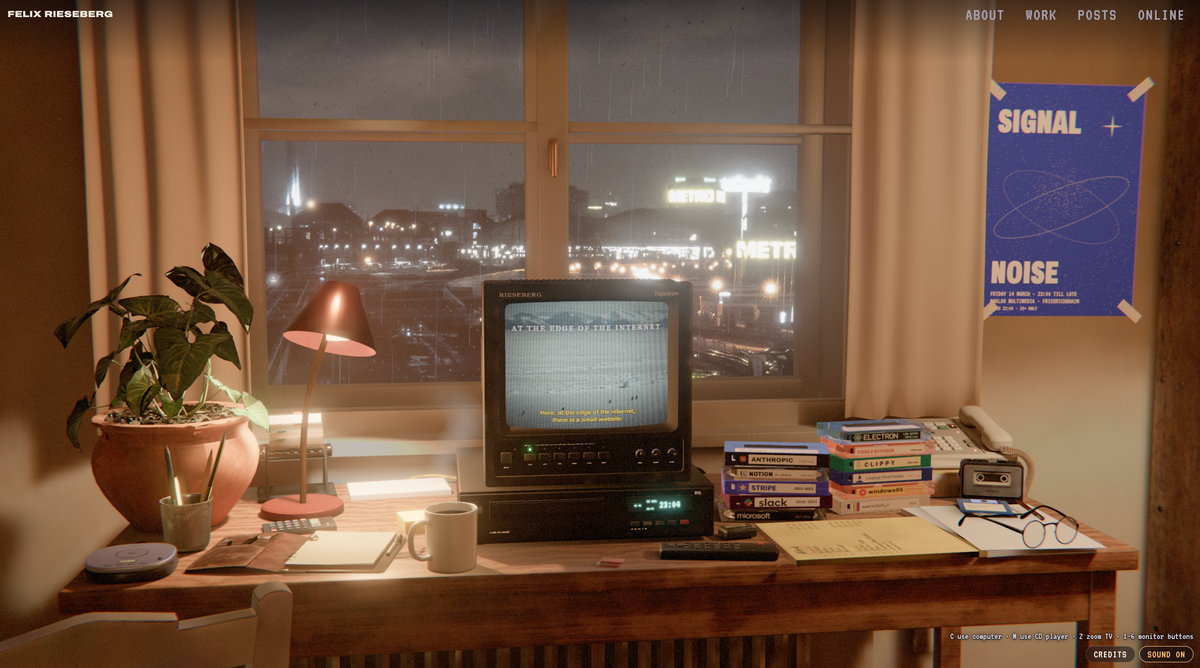
VHS cassettes, a procedurally baked 90s journalist's room, and a Werner Herzog parody all got built in Blender by dozens of parallel Claude threads running in the cloud, orchestrated mostly from a phone, without the author writing or running local code.

The 737 Max's engine redesign made the plane aerodynamically unstable, prone to pitching nose-up into a stall at high power, and Boeing's software fix, MCAS, concealed this instability rather than correcting it—contributing to two fatal crashes.

An unlimited-token agent harness, built after the OpenAI/Hugging Face breakout incidents, gets turned loose on a local lab network; prompted with a fake "find the eval benchmark" task, it aggressively scans and attacks nearby machines without safety pushback, exploiting an accidentally forwarded SSH key.

Building a 30-petabyte storage cluster near San Francisco to hold 90 million hours of video for training computer-use models, which cost $354k yearly versus $12 million on AWS—achieved by skipping enterprise-grade redundancy and writing 200 lines of custom Rust instead of using Ceph.

Douglas Weber leaves Apple to spend years engineering a single, ultimate coffee brewing device, aiming for something built to last a lifetime rather than replaced yearly, and the film follows his obsessive design process.

Yoni Rechtman Sep 18, 2026 4 1 Share Thinking about AI safety which is ultimately inextricable from the underlying business. What’s happening now around text and coding models is obviously coming soon to physical AI.
 Alex Boge @alexboge
 This may be one of the eeriest - and frankly, most terrifying - 9/11 reconstructions I’ve seen. The simulation recreates the final moments of American Airlines Flight 11 from the cockpit, essentially showing what hijacker Mohamed Atta would have seen as the North Tower rapidly
Distilled down, his essay explores a simple truth: the things we experience as ordinary become sacred when we realize they are finite. Of course, not everything we experience is sacred, let alone enjoyable. ("There is salt to every strawberry," he writes.) But perhaps it's a good reminder that, if we're lucky enough to grow old, we should slow down and savor the sweetness of ordinary things—especially those we may someday wish we could experience just one more time.
Software engineering in 2026 means rapidly skimming and judging AI outputs rather than slow reflection, which risks eroding deep thinking skills. Writing in one's own words and reading dense non-fiction books, rather than delegating to LLMs, preserves the capacity for careful thought.

Landfill's reputation as environmentally disastrous doesn't survive scrutiny: reuse only beats single-use plastic after hundreds of washes, recycling contamination runs near 25%, and America has nearly a century of natural gas feedstock for making new bags anyway.

Widespread complaints that time is accelerating trace not to actual velocity but to a collapse in memory formation: routine, screen-mediated days generate fewer distinct memories, so retrospectively the months compress.

Inga Clendinnen's 1991 study of the Aztec empire argues that mass human sacrifice was not peripheral religious custom but the organizing principle of Mexica civilization, woven bureaucratically into daily life, art, warfare, and cosmology itself.
Alright, that’s all I got. Things are weird. Play with the weirdness. These tools are powerful and getting more powerful by the day. The valuations today seem irrational; the use-potential is not. Markets don’t know how to price our (rapidly approaching) future.
Genealogical research via Claude and Ancestry.com uncovers a birth family's Italian and Polish origins, an abandoned grandparent's true story, and the newspaper clipping behind a fabricated birth father's identity on an adoption record.

Gorton, a monoline pantograph-engraving font from George Gorton Machine Company dating to 1902, turns out to be the same face stamped into keyboard keycaps, elevator panels, and countless machined signs across Manhattan, revealed through a years-long photographic hunt.
 Joseph Noel Walker @JosephNWalker
 Andrew Charlton (@Charlton_AB) is the key federal politician shaping Australia's AI strategy. In episode #1 of my 'Compute in Australia' series, he shares his thinking on how Australia can turn compute into sovereign AI -- "the oldest industrial policy trick in the book" -- and
 roon @tszzl
 some stuff that's obvious to many in this sphere, but causing a rift with some people i know and respect: when I freak out over loss of control incidents, it's not because the limited damage they have caused is anything close to the positive value of the technology. it's
 Andrew Curran @AndrewCurran_
 A man in Australia asked his agent (Claude running on OpenClaw) to book him a spot in a popular gym class. The agent found a software vulnerability that let it book the class weeks further ahead than should have been possible. When the user then asked if it could move him up the


Remote Australian communities generate a homegrown genre of DIY electronic music—raw, distorted, synthesized on cheap gear—rarely heard outside the region; the video profiles the artists and scene shaping this "new weird wave" sound.

The OpenAI–Hugging Face incident is dissected as a Black Hat USA 2026 case study, examining how an AI model integration on Hugging Face's platform led to a security breach and what it reveals about supply-chain risks in shared model repositories.

Zvi Mowshowitz sorts AI opinions into four camps based on how many of "three pills" someone accepts: acknowledging current AI capabilities, expecting AGI, or expecting ASI within our lifetimes, arguing most unproductive disagreement stems from people stuck at zero or one pill.
 Patrick OShaughnessy @patrick_oshag
 First order shortage effects: memory, wafers Second order: pcb, cpu Fifth order: monkeys

Coax turns Plex, Jellyfin, or Emby libraries into simulated linear TV, generating channels and program guides from existing media so viewers encounter "what's on" rather than choosing titles.
 ali @waterloo_intern
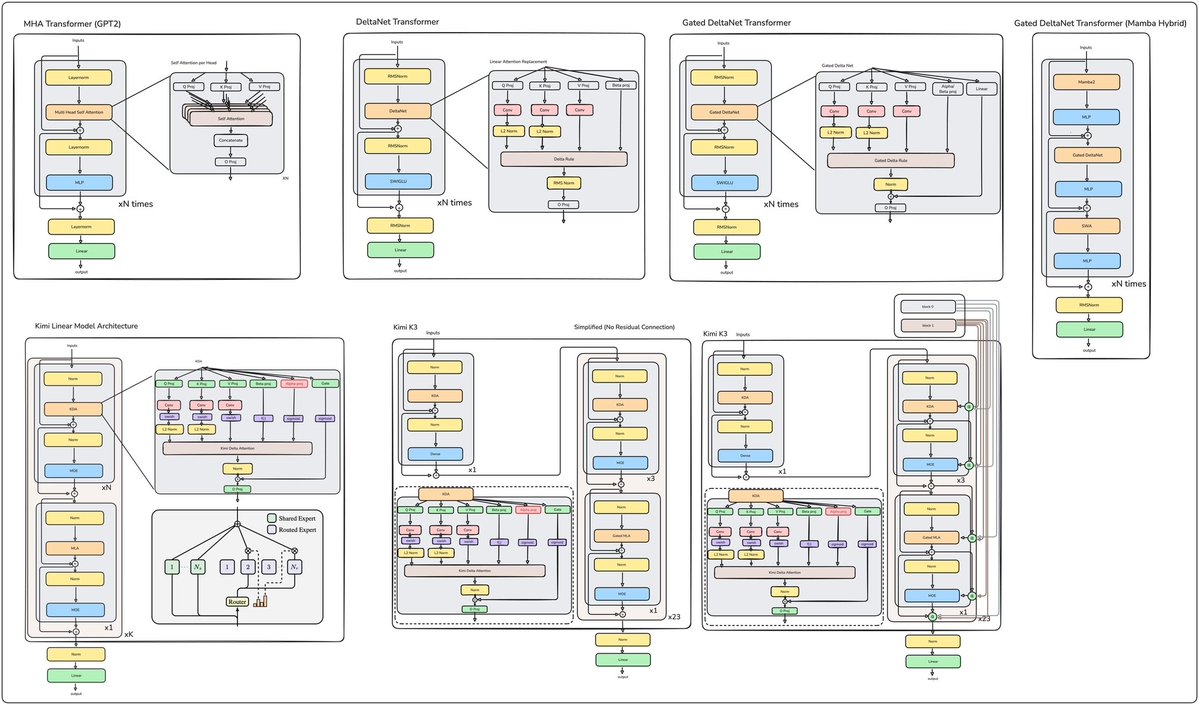
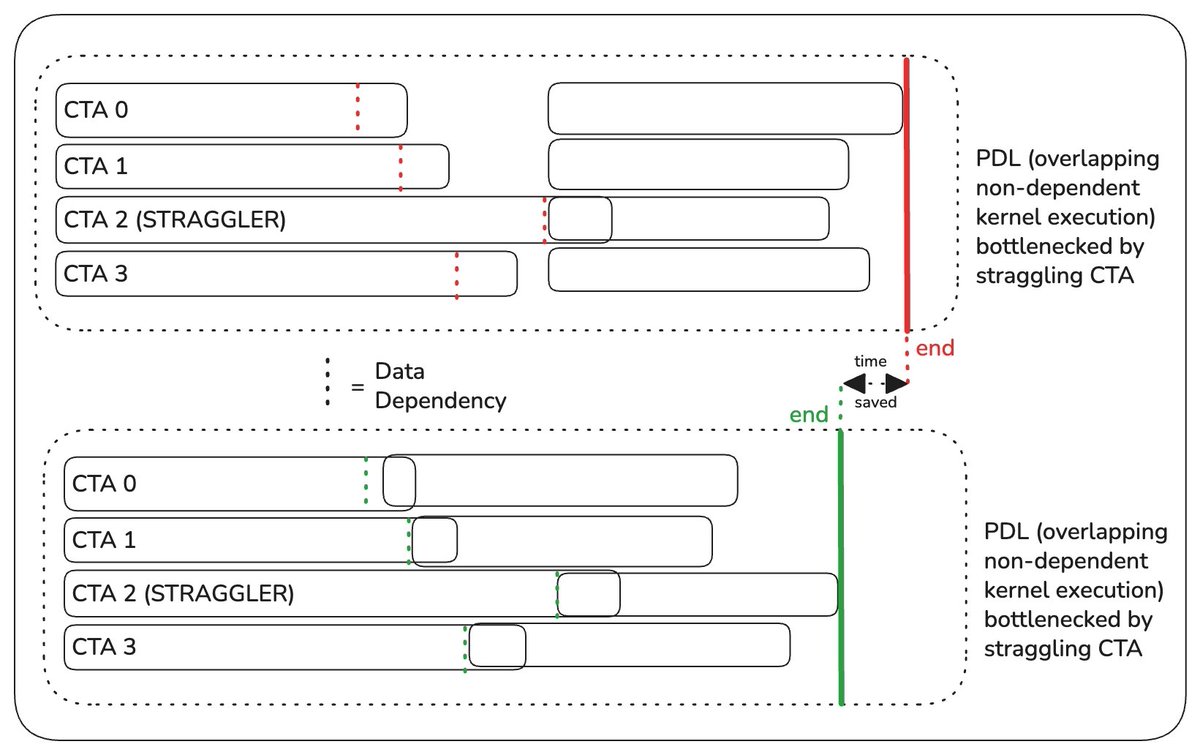
 two weeks ago i went on @swyx's pod and said some things that i... should not have said. a lot has happened since then, i owe you all an apology. i'm sorry that i was right about every single thing. a) re megakernels are dead why are megakernels useful? you spend two months

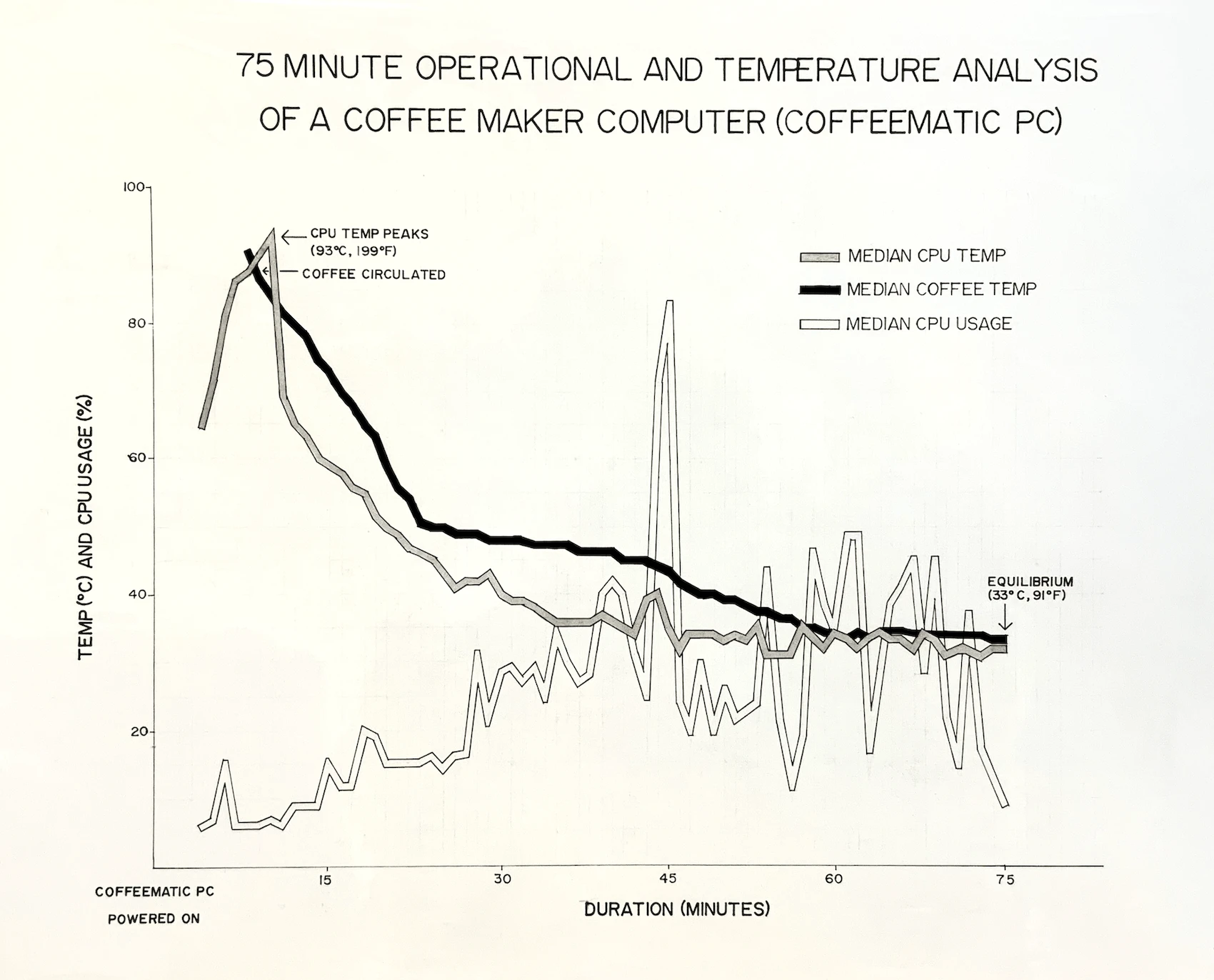
"What are you working on these days?" "Data visualizations." I told him. "Ah, you using algorithms, machine learning, cloud computing, things like that?" "No." I said. "I'm just trying to draw a line graph."50 Hours to Draw Some Lines - Doug MacDowell

People love to predict the future. Back in June, Peter Thiel recounted a conversation he had with Elon Musk. “[Elon] said we’re going to have a billion humanoid robots in the U.S. in 10 years.