Sunrise Sunset Tap Co.
A booking site, a texting booking agent and an owners' portal for a tap truck some friends and I talked about running in Perth. A proof of concept we didn't take further.
↗ live ↗ repo → read it as an essay
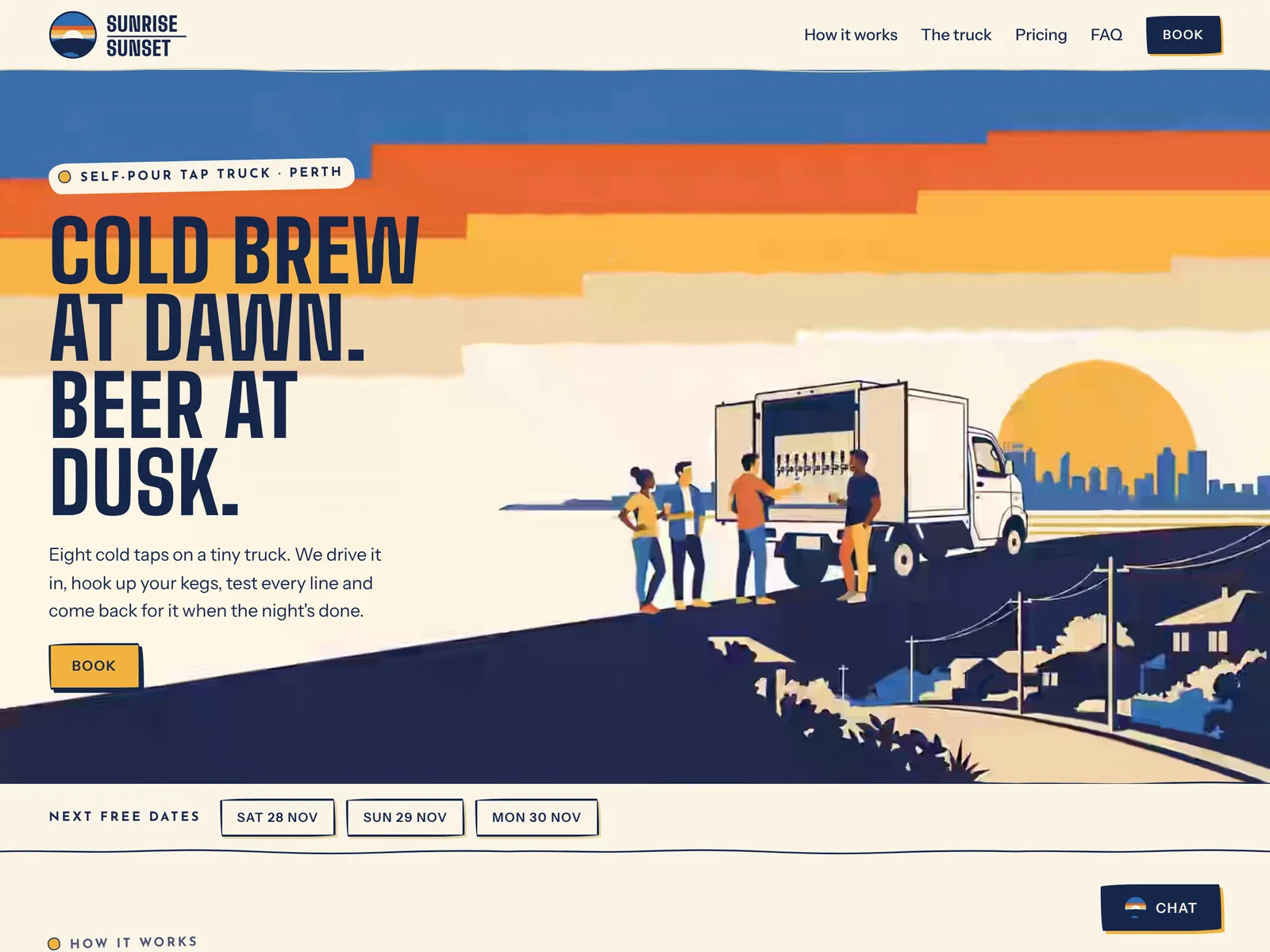
A few friends and I spent a while talking about buying a small tap truck and hiring it out around Perth. The idea was dry hire: the client buys the drinks, and we'd drop off a little Suzuki Carry with eight taps on the back, then come and get it when the night's done. Cold brew in the morning, beer at night. The name comes from the hill the run club runs over on Wednesdays.
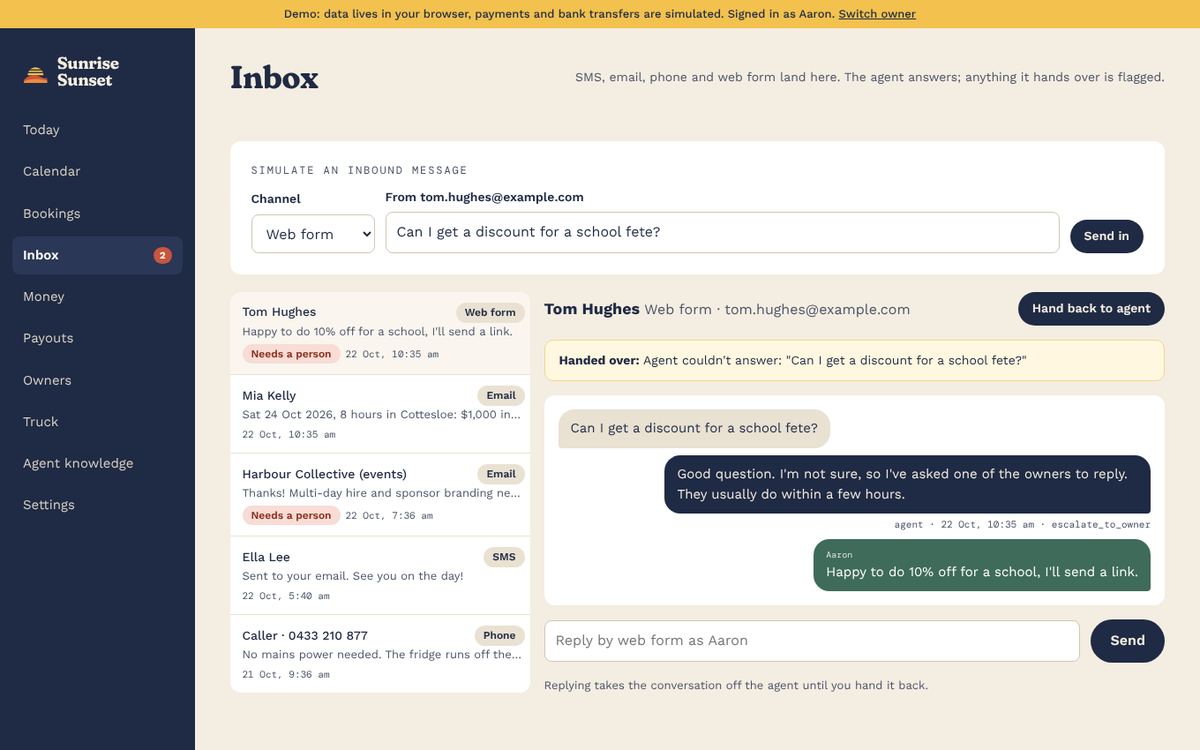
Before anyone spent a dollar, I wanted to see what running it would look like. So I built the whole business as a demo: a public site with live availability and booking, a booking agent that answers texts, email, calls and the web form, a simulated Stripe checkout, and an owners' portal that runs the money from deposit to quarterly payout. There's also an explainer of how the truck runs itself and a business plan.
None of it is real. Every payment, text and bank transfer is simulated, no domain was bought, and we aren't doing anything with it right now. It was a proof of concept, and it answered the question it was built for. The demo still works if you want to poke at it: text the agent from the Chat button, book a date, then sign in as an owner from the outbox and approve a payout.
What follows is the write-up from the demo's own How this was made page, lightly edited. It covers three days in October, from the first message to a hardened build.
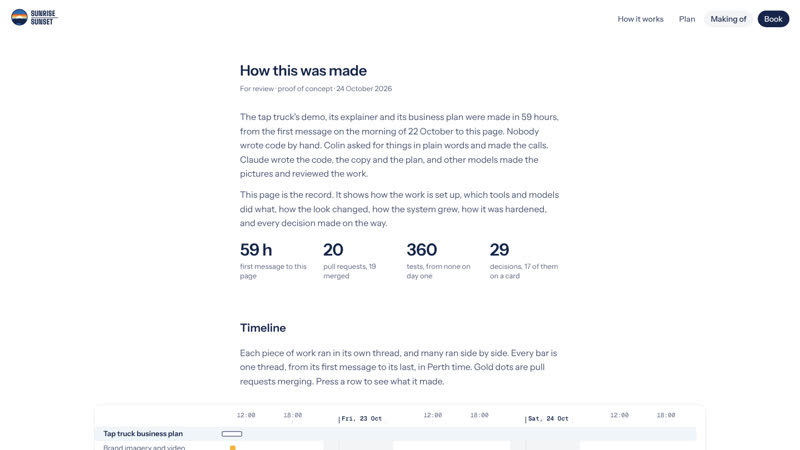
The demo, its explainer and its business plan were made in 59 hours, from the first message on the morning of 22 October to the write-up. Nobody wrote code by hand. I asked for things in plain words and made the calls. Claude wrote the code, the copy and the plan, and other models made the pictures and reviewed the work.
Timeline
Each piece of work ran in its own thread, and many ran side by side. Every bar is one thread, from its first message to its last.
Every thread, first message to last
22 to 24 October, Perth time · the lines are midnight
- build
- review
- pictures and video
- plan and research
The full log, hour by hour
Thursday 22 October
- The project starts: a co-owned tap truck for Perth, hired out dry. Three rounds of questions set the business rules.
- The name: Sunrise Sunset Tap Co., after the hill the run club runs over on Wednesdays. Cold brew in the morning, beer at night.
- Buy nothing and set up nothing yet. The domain waits, and every payment, text and bank transfer is simulated.
- The first build: the site, booking, the agent, a simulated checkout and the owners' admin. 45 files, 5,830 lines.
- Fal connects through MCP, so threads can make images and video without an API key.
- The first stills are fixed with image edits, and three video models make the first loops.
- "The design leaves a lot to be desired." Two directions come back: Golden Hour and Hill Repeats.
- Golden Hour for the site, with Hill Repeats for the admin.
- The restyle lands. Seedance makes the Golden Hour loops.
- Video goes on hold. Two reviews start in parallel: one by Fable, one by Opus.
- The copy deck: every string on the site, 428 of them, with 117 flagged for a look.
- 11 judgement calls from the reviews. All owners are directors, the promised texts are cut, the rest take the default.
- #1 merges the review fixes: money held until the hire, runner fees, the agent's routing. 28 tests.
- #2 adds the repo's agent rules (AGENTS.md).
- #4 and #5: the copy edits, and delivery measured from the Perth CBD.
- Stills only for now: no runners in the hero, and all 8 taps on the truck's rear.
- Hero A2 and truck B1 from the third round of stills.
- The new stills become Seedance loops.
- Every owner goes into the demo as a director, with equal shares.
- "It feels more AI generated." Three hand-made options: Ticket, Hand-cut and Luggage label.
- Hand-cut.
- Polish round 3. "Text us" becomes "Chat". An article on agent-native apps leads to an agent for the owners.
- The play and pause button comes off the loops, accepting the WCAG 2.2.2 miss.
- #6 merges the polish pass and the rear-tap loops, with #7 Hand-cut inside it.
- The inbox becomes a decision queue (option C).
- #8: the owner SMS agent, with everything the admin can do. 40 tests.
- #9: the admin's type scale and sections.
- #12: the hero and the Chat button line up with the page. Every CTA says Book.
- #13: Topaz Starlight restores the soft loops.
Friday 23 October
- The demo moves to sunrisesunsettapco.cpd.dev, a subdomain. Still no domain bought.
- #14: the logo on the share image (option A).
- #15: Vercel Web Analytics.
- "Too playful." The white console starts as a comparison.
- "That's 100x better." The white console stays.
- Every recommendation in the reviews is accepted.
- #10: the inbox as a decision queue, with drafted replies.
- #11: the owner agent reads the same queue.
- #17: the owner admin as a white console.
- Shantell Sans for the diagrams on a new explainer.
- Claude Managed Agents: more than this needs. Keep the Messages API loop and Vercel Cron.
- Answer engine research. Keep the demo out of search until there is a real domain.
- The new goal: production grade and bulletproof, built so it could serve other businesses later.
- The red team, run on a local Mac by three models: 3 critical and 12 high findings.
- The fix plan: 5 reviewers, 33 findings, 13 corrections to the first plan.
- A demo for other businesses is out of scope. DEMO_MODE turns the demo parts on and off.
- #19, phase 1: the quick fixes. 173 tests. The 6 attacks it covers now fail.
- Neon for Postgres, not Supabase.
- "We built our own auth." Three models review it and find 17 holes, all fixed in the same PR.
Saturday 24 October
- Production secrets made with openssl. Neon in Sydney, with Neon Auth off.
- Each deploy runs its own database migrations first.
- #20, phase 2: data on the server, signed texts, owner sign-in and approvals. 360 tests.
- #18: the explainer and the business plan pages.
- The write-up below is asked for.
How the work is set up
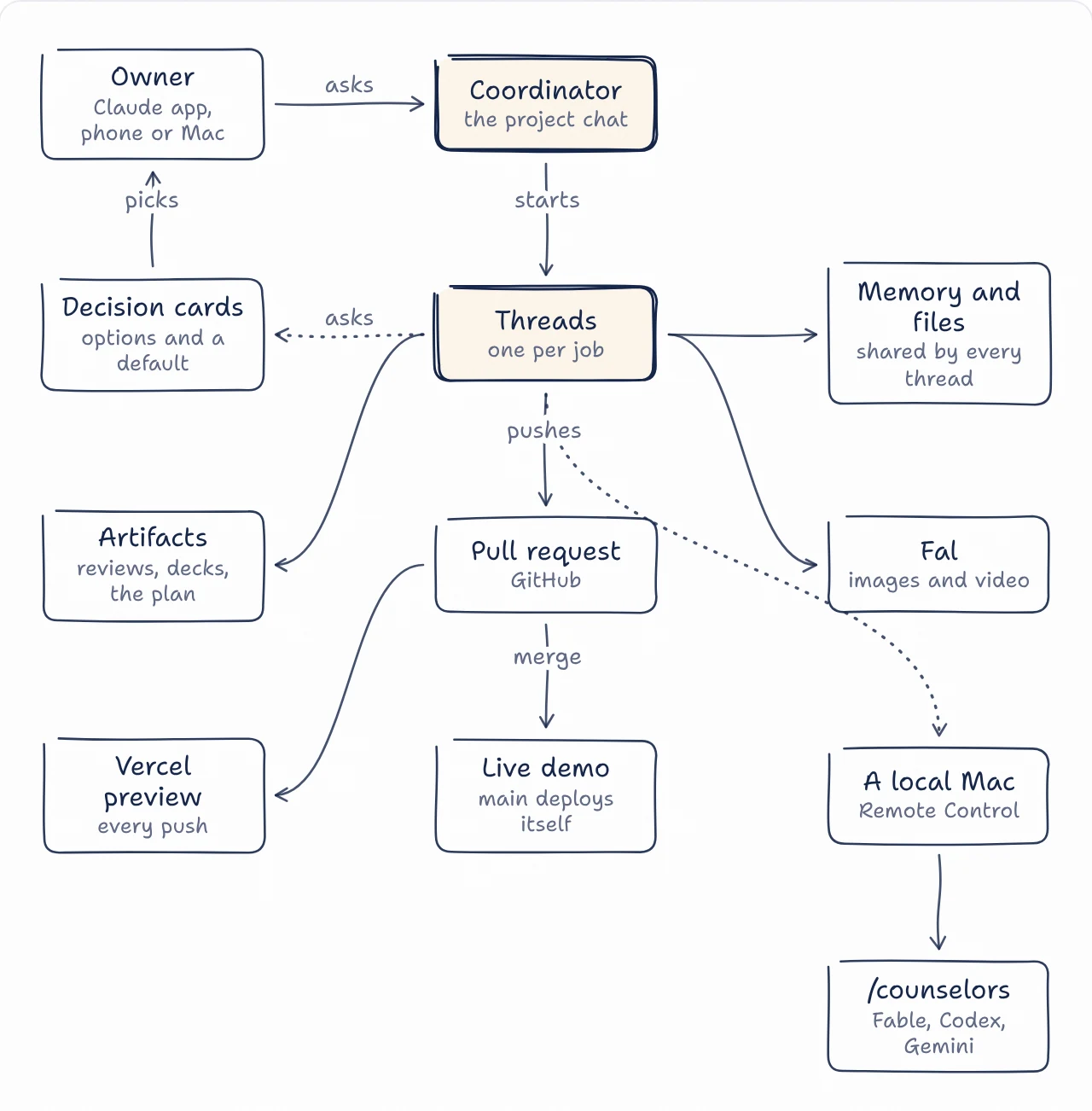
Everything happens in one Claude project. Requests go to a coordinator in the project chat. The coordinator starts a thread for each job, and each thread is a Claude Code session in its own cloud container with the repo cloned. Threads run in parallel, often several at once, and each one only knows what its brief and project memory tell it.
Each thread works the same way. It posts a checklist, does the work, runs npm run typecheck && npm test && npm run build, takes screenshots at 375, 768 and 1440 px for any UI change, and opens a pull request. I open the preview and merge. Nothing reaches main any other way.
When a choice changes the goal, I make it. The thread posts a decision card with a recommended option and keeps working on that option while it waits. Picks go into project memory, so the next thread starts with them. The repo's own rules are in AGENTS.md, added in #2 on the first day.
Tools and models
Tools and models, and what each did here
| Tool or model | What it did |
|---|---|
| Claude projects | The coordinator, the threads, project memory and the shared files folder. Decision cards and checklists in the Claude app. |
| Claude Code on the web | Every thread: reading the repo, writing code, running tests, shooting screenshots with Playwright, opening PRs. |
| Claude Opus | The builder in every thread, and the second of the first two reviews. Extra High effort for the hard hardening units, Medium for small ones. |
| Claude Fable 5.1 | The reviewer: the first design and build review (20 findings), the inbox review (19), the white admin review (26) and the migration review before #20 merged. |
| Remote Control | Threads that need a local machine run there: the red team and the auth review. |
| /counselors | One prompt to three models from three labs: Fable 5.1, Codex Astra 6 and Gemini 4 Argon (through the Antigravity CLI). They review on their own, then the findings are merged and checked. |
| Artifacts | Long results as pages: the reviews, the 428-string copy deck, the business plan with in-place editing, the answer engine research. |
| Figma (GPT Image) | The first photoreal stills. |
| Fal, by MCP | Every other image and video. GPT Image 2 and Nano Banana 2.1 for stills and edits. Kling v3 Pro, Gemini Omni Flash 1.1 and Seedance 2.5 for video. Topaz Starlight Precise 2.6 to restore the soft loops. |
| ffmpeg | Loops: H.264 for browsers, seamless ends, posters. |
| Next.js 15, React 19 | The site, the admin and the story pages. Drizzle on Postgres: PGlite in WASM locally and in tests, Neon (Sydney) in production. |
| Anthropic SDK | The two agents, booking and owner, on the Messages API with tools. A rules engine answers when there is no key. |
| GitHub, Vercel | PRs, previews, production, Cron for the daily jobs, Web Analytics. |
| Fonts | Big Shoulders, Josefin Sans and Instrument Sans on the site. Geist in the admin. Shantell Sans for the diagrams. |
Two tools were looked at and left out. tldraw lost to a small hand-drawn engine written for the explainer, because its SDK needs a paid licence in production; the diagrams here use that engine too. Claude Managed Agents was more than this needs: a booking agent doesn't need a managed sandbox per session, so it stays a Messages API loop with a daily Vercel Cron.
Fal cost real money. The account ran to −$36 on the first afternoon, so the rule after that was a cost estimate before every batch. The rear-tap loops cost about $15, the truck wrap about $2 and the Starlight restore about $1.70.
Claude cost more, in tokens. Across 33 sessions the bill comes to $329.87 at API list prices. Almost all of it is reading: each turn reads the whole conversation again, and the prompt cache serves 98% of that.
Cost per thread, the ten biggest first
$329.87 across 33 sessions at API list prices · 593M tokens read, 98% from the cache · 2.21M written
| Model | Sessions | Cost | Written | Per 1M written |
|---|---|---|---|---|
| Opus | 28 | $259.41 | 1.91M | $135 |
| Fable | 5 | $70.46 | 0.29M | $242 |
- Opus
- Fable
- sums
Fable costs more per token, and a review reads a lot of code to write short findings, so the review threads cost the most for what they wrote. The coordinator ran at Low effort, so all its sessions together cost less than the biggest thread. The biggest threads, the explainer and the business plan, ran for hours and read their history again on every turn.
The two reviews on my Mac, the red team and the auth review, used /counselors. Each counselor CLI keeps its own logs, so their tokens are counted separately. Three of the six counselor runs failed the first time (an empty file and two timeouts) and ran again. The two reviews came to about $47.98, which makes the total about $378.
The two /counselors reviews on the Mac
About $47.98 · failed first tries included
| Model | Role | Read | Written | Cost |
|---|---|---|---|---|
| Codex Astra 6 | counselor | 8.45M | 0.06M | $15.90 |
| Fable 5.1 | counselor | 1.63M | 0.15M | $14.66 |
| Gemini 4 Argon | counselor | 2.84M | 0.15M | $7.20 |
| Opus | ran the reviews | 35M | 0.07M | $10.22 |
How the look changed
The look changed five times in two days, each time after a plain note on what was wrong with the last one.
Night Run. 22 October, 10:37. The first build, in a dark look. It worked, but "the design leaves a lot to be desired".
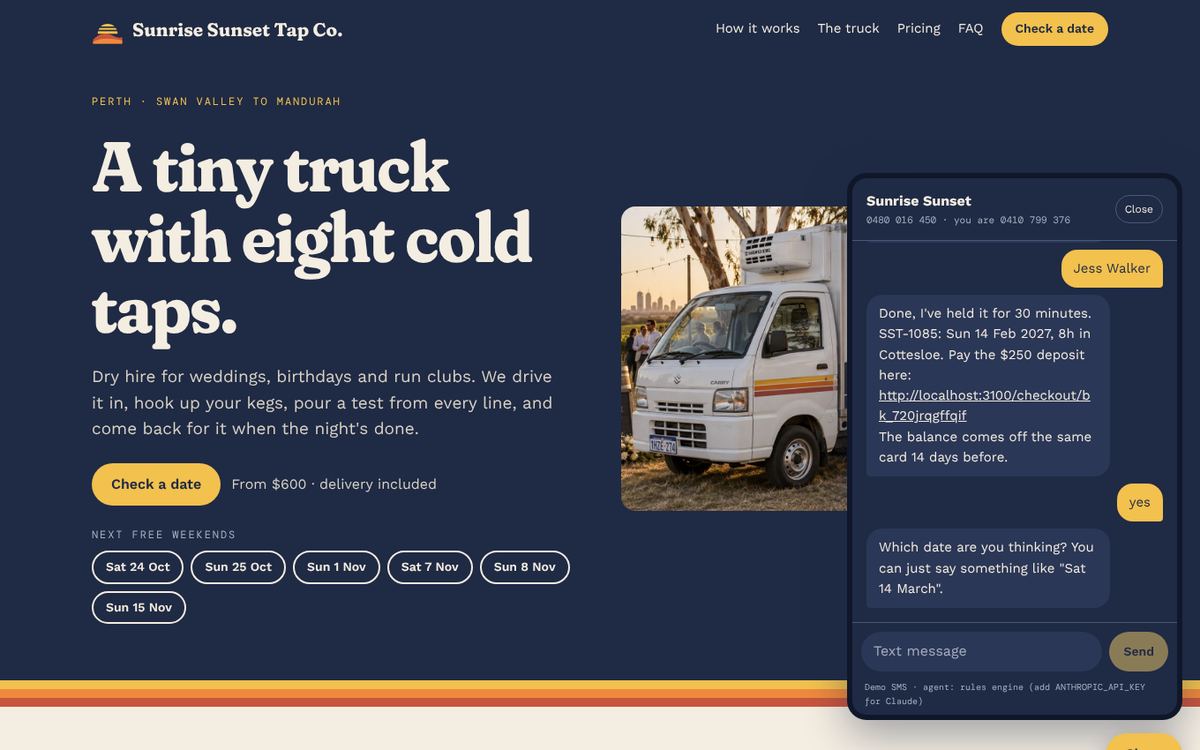
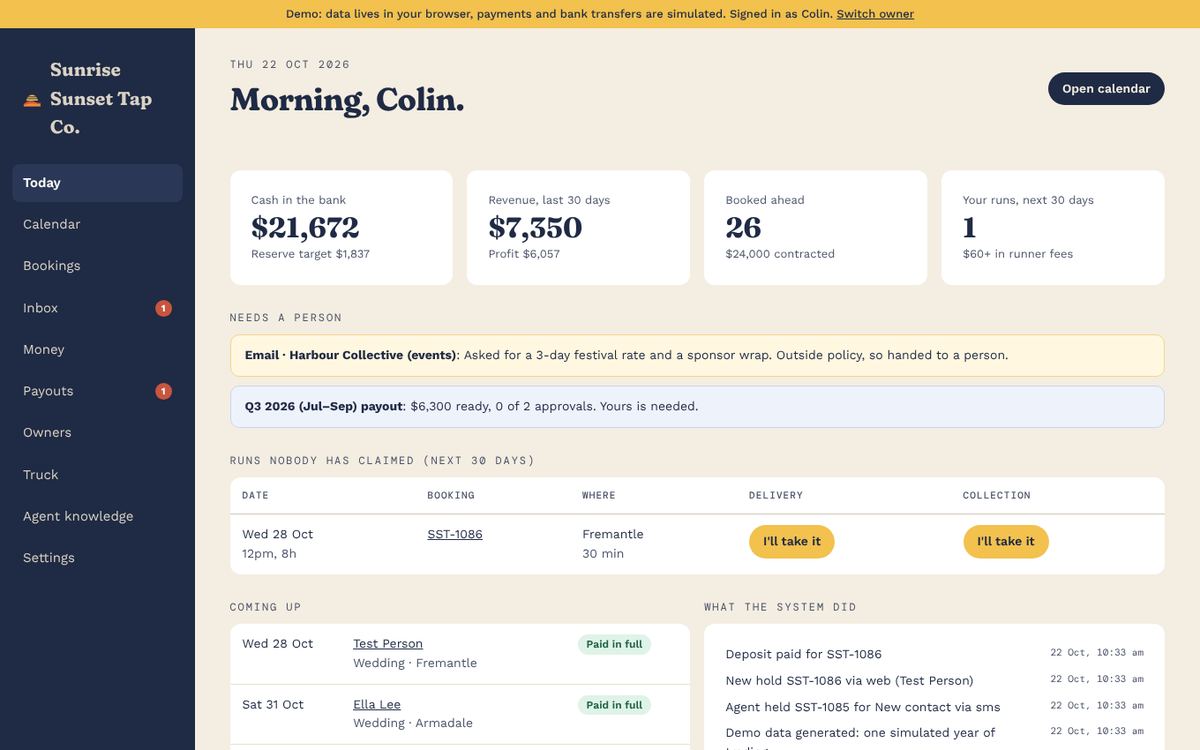
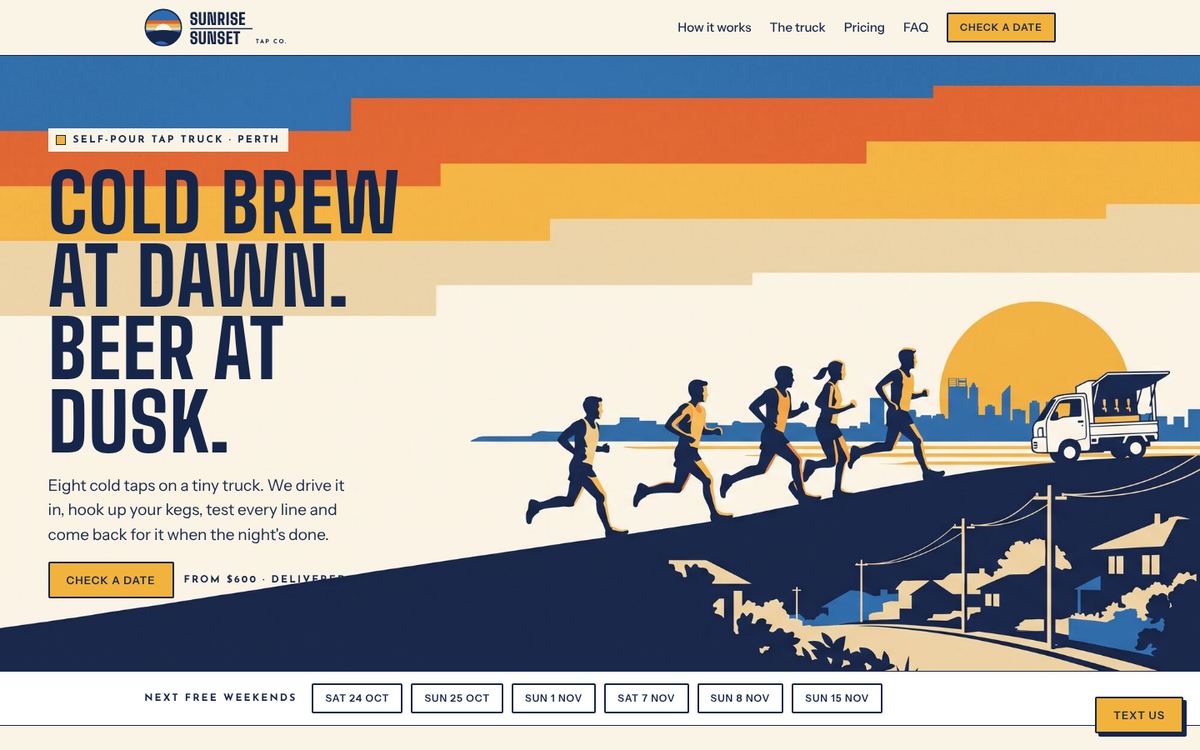
Two directions. From three references (golden age travel posters, contemporary flat, Shelf Edge charts). A was Golden Hour, a 1930s railway lithograph. B was Hill Repeats. I picked A for the site and B for the admin.




Golden Hour. 22 October, 11:33. The restyle lands on the site.
Rear taps. Dry hire means nobody pours from inside the truck, and the taps are on the back. So: no runners in the hero, and all eight taps on the rear.
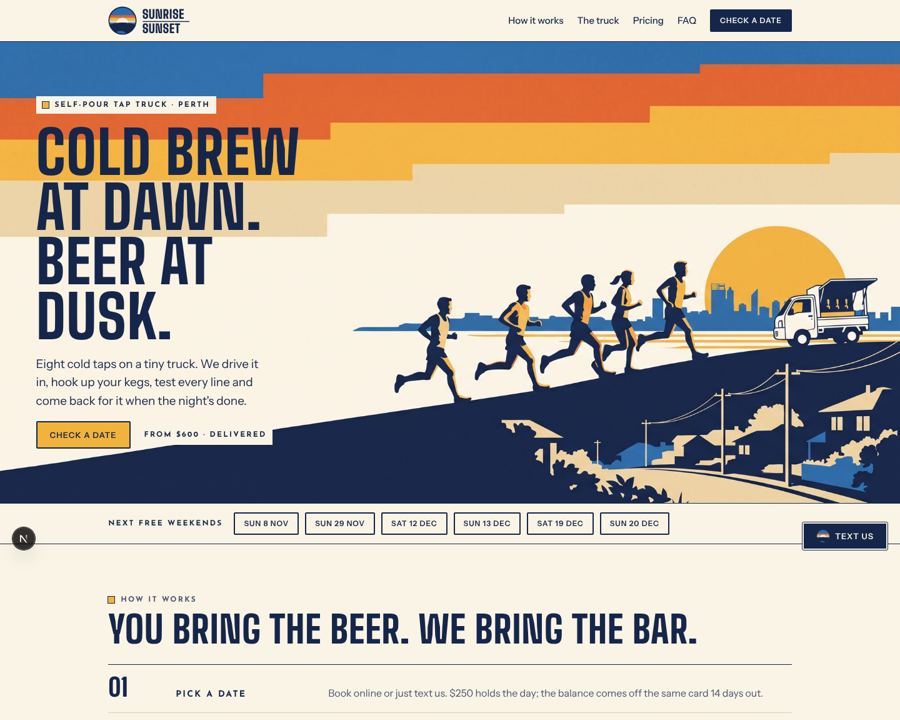
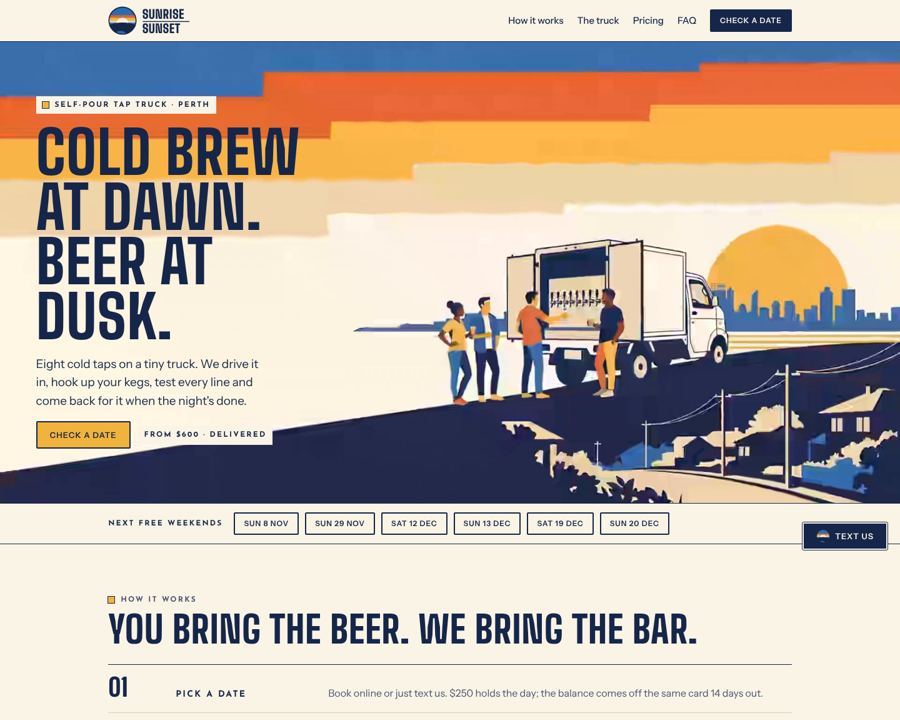
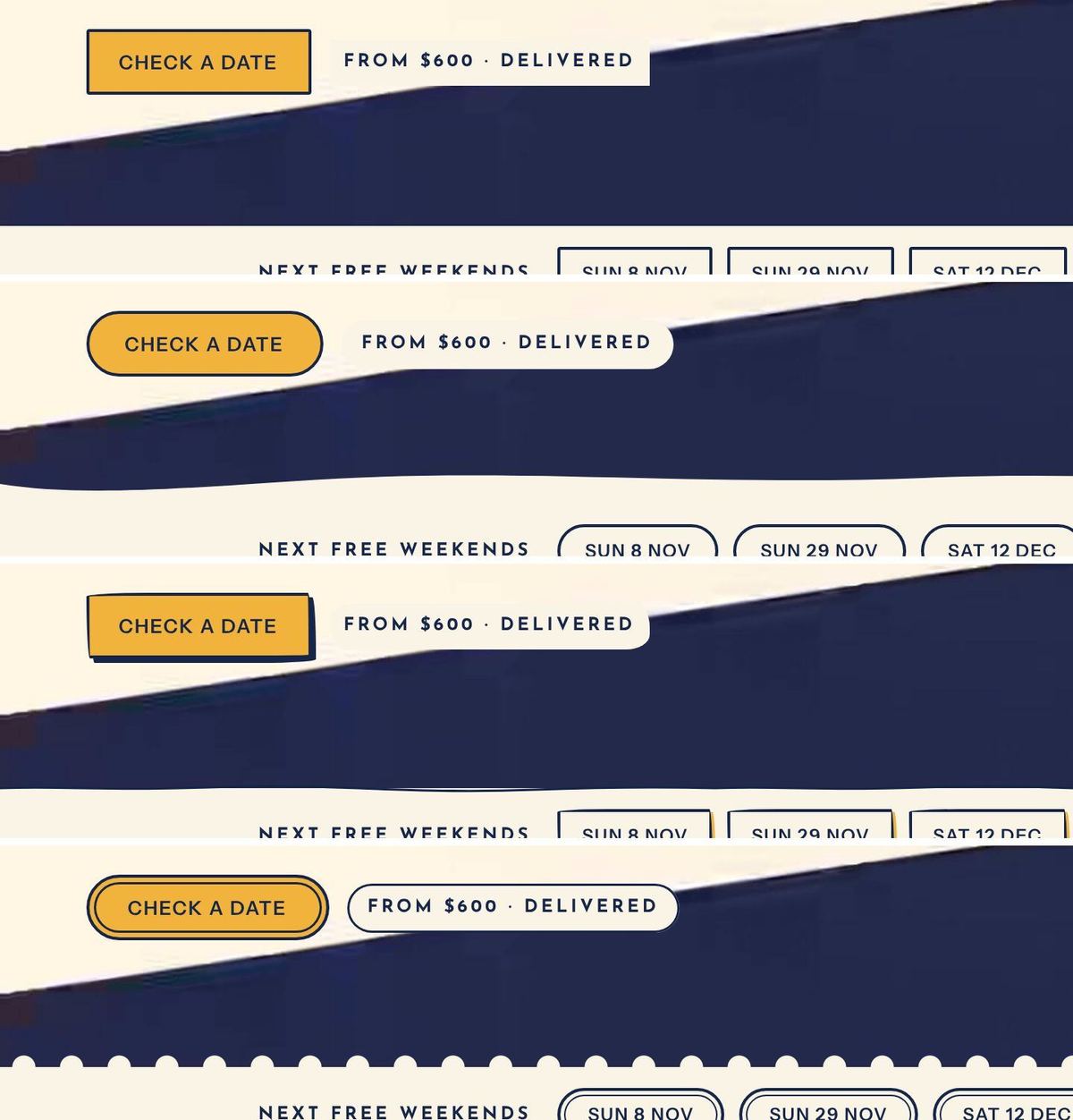
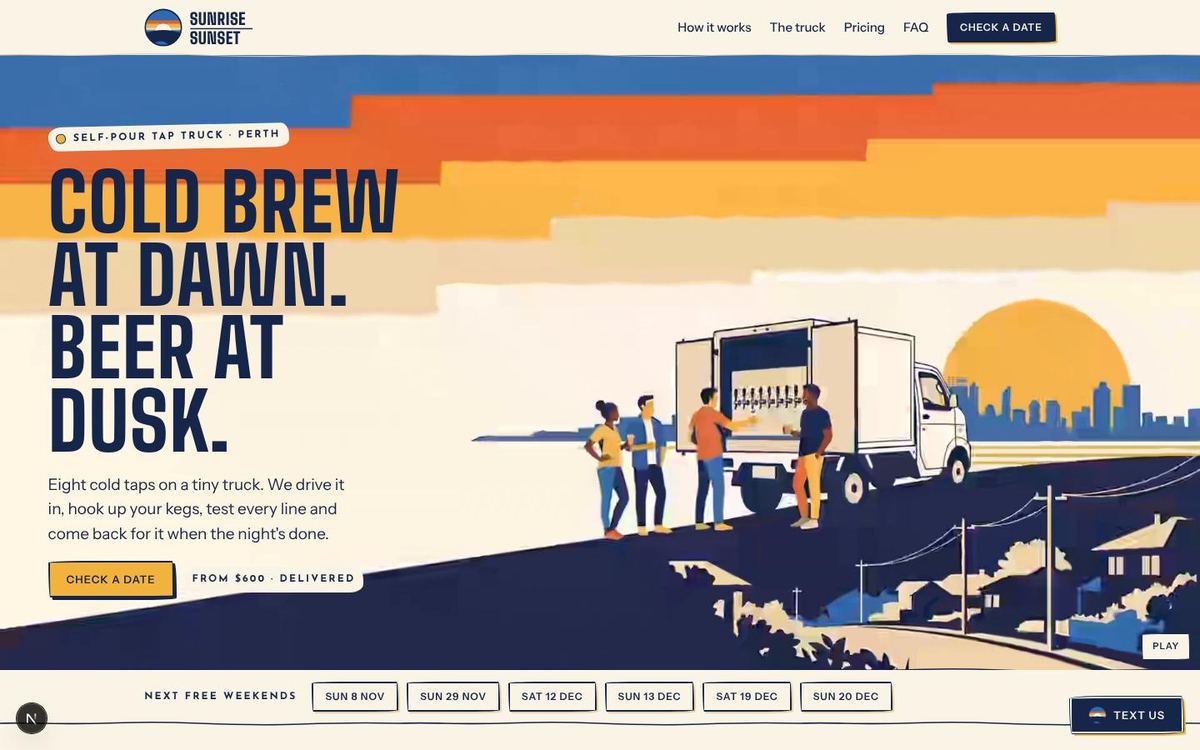
Hand-cut. "It feels more AI generated." Three hand-made treatments of the same hero: A Ticket, B Hand-cut, C Luggage label. B won, against the recommendation.
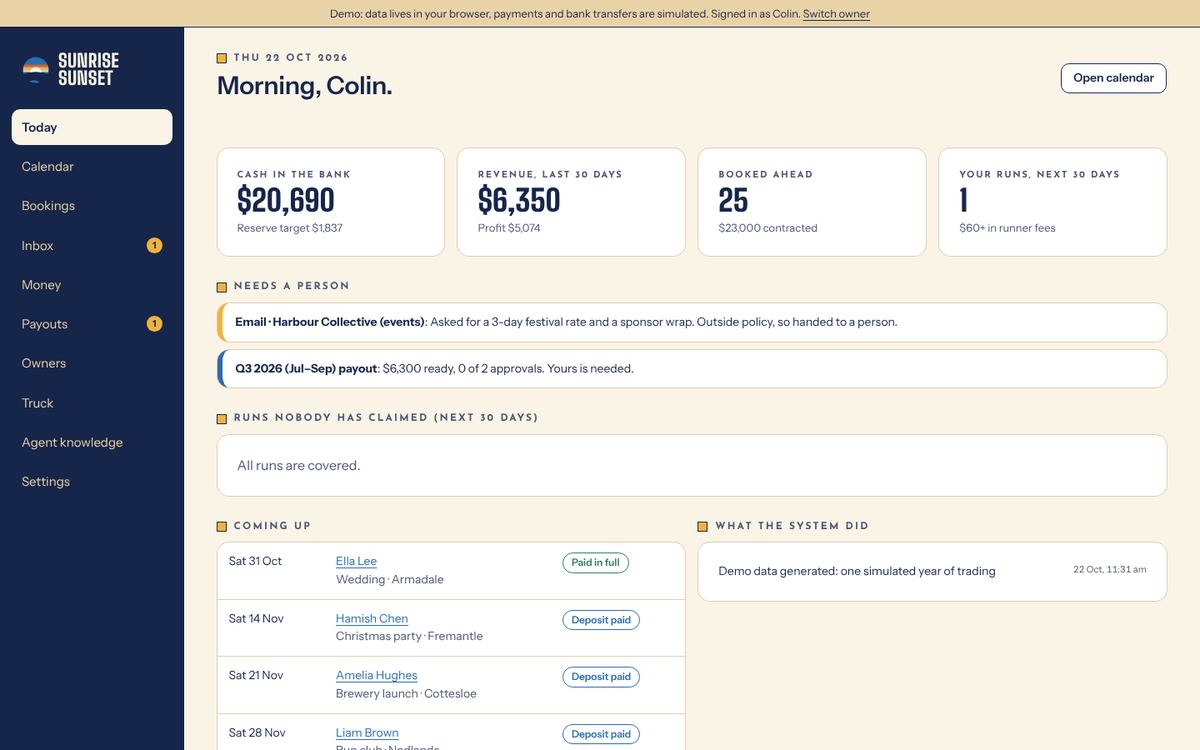
White console. 23 October. The Hill Repeats admin was "too playful". The white console in #17 is in Geist, with the poster colours as accents only. My verdict: "That's 100x better."
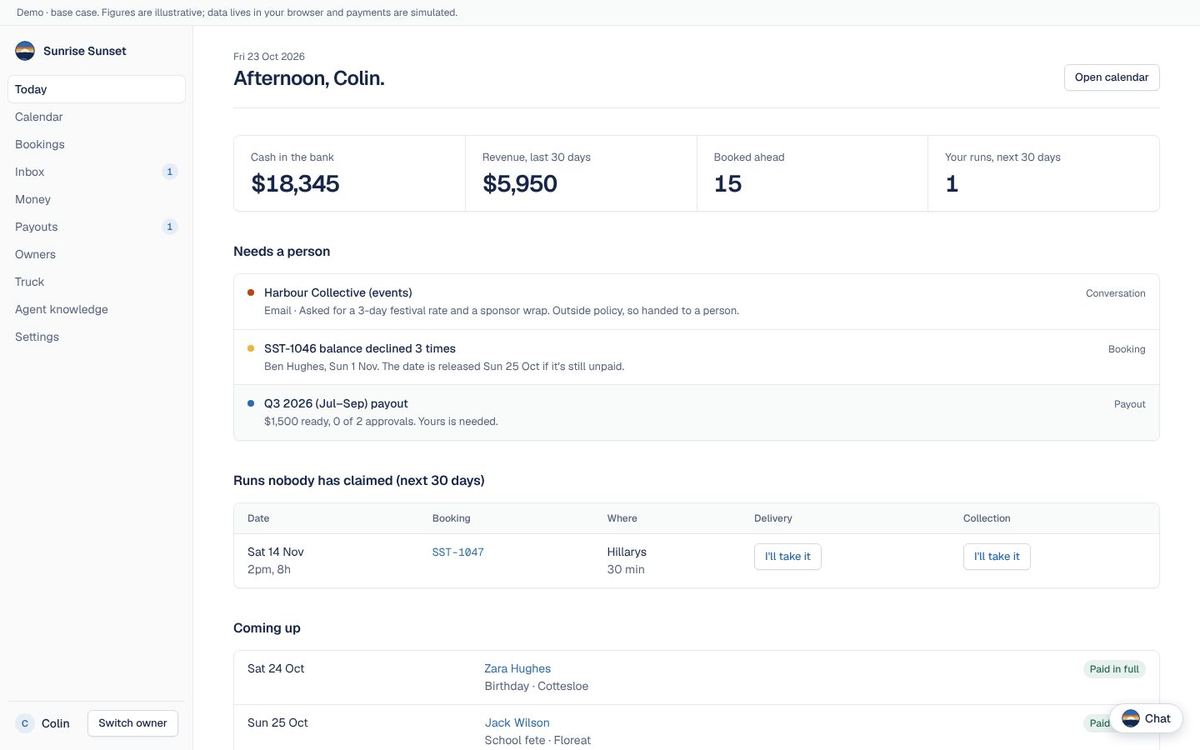
Inbox. The inbox went from a list of chats to a decision queue with drafted replies (#10, option C), then into the white console.
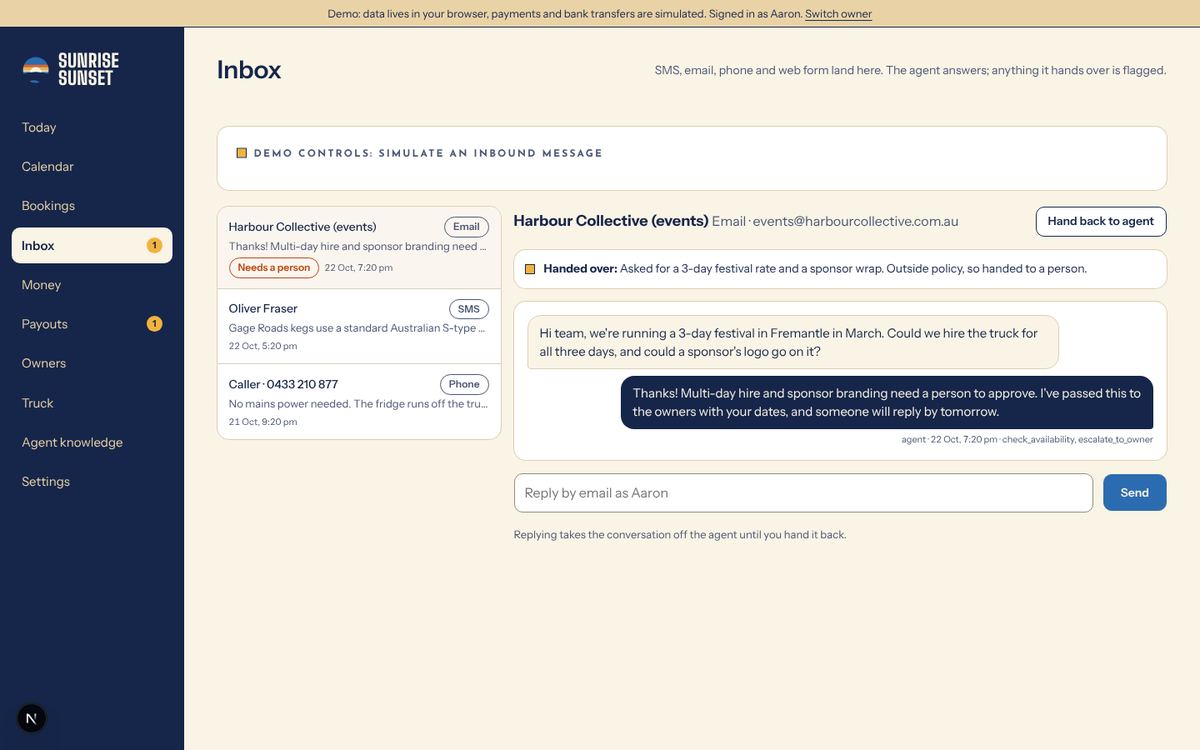
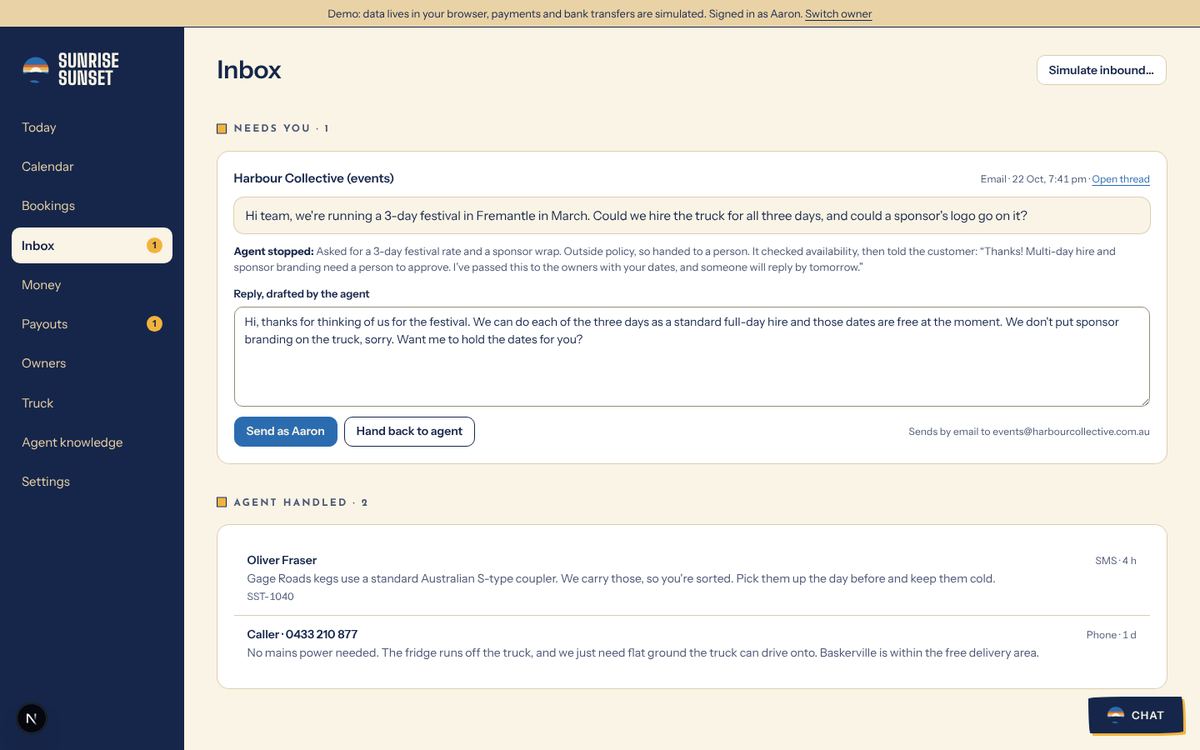
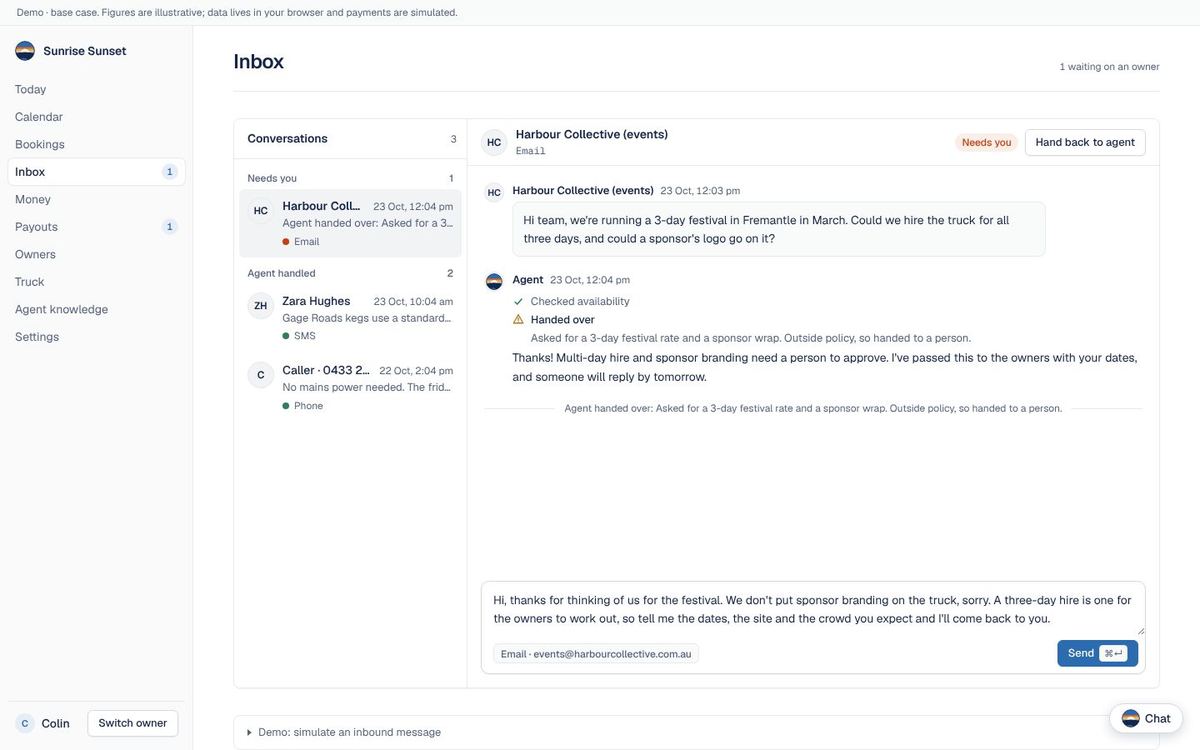
Some rules came out of this and still hold: no left accent bars on rounded boxes, Emil Kowalski's motion guidance, Golden Hour tokens only, and no play and pause button on the loops.
Pictures and video
The first stills were photoreal. Each had a fault a model could fix with an edit: a brand badge, a staff member pouring, the wrong shirt. Nano Banana 2.1 fixed the wedding at 2K with an unbranded fridge and a chalkboard. GPT Image 2 fixed the run club: the Suzuki badge, the club shirt, self-serve taps and nobody in the truck.
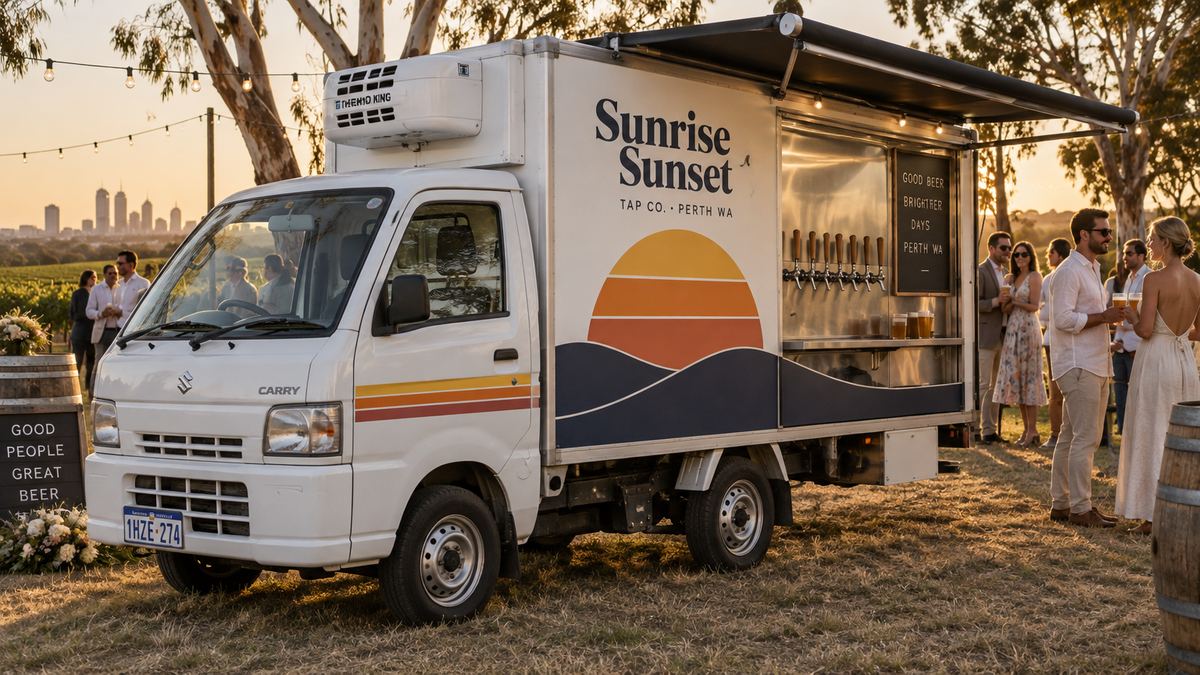
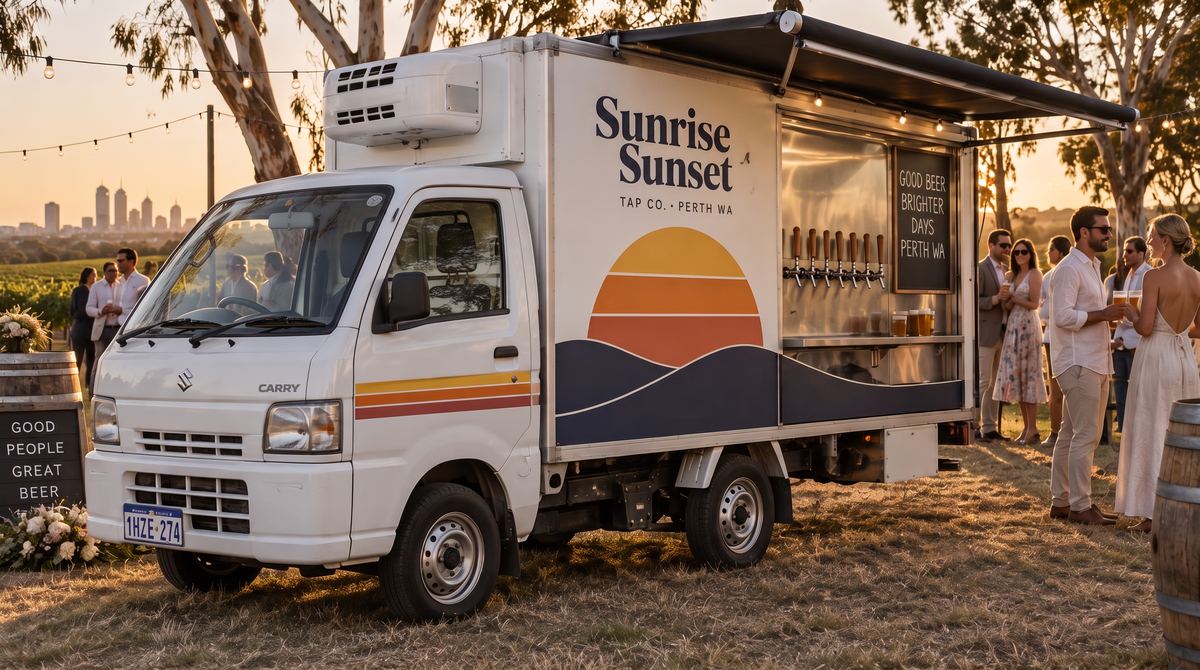
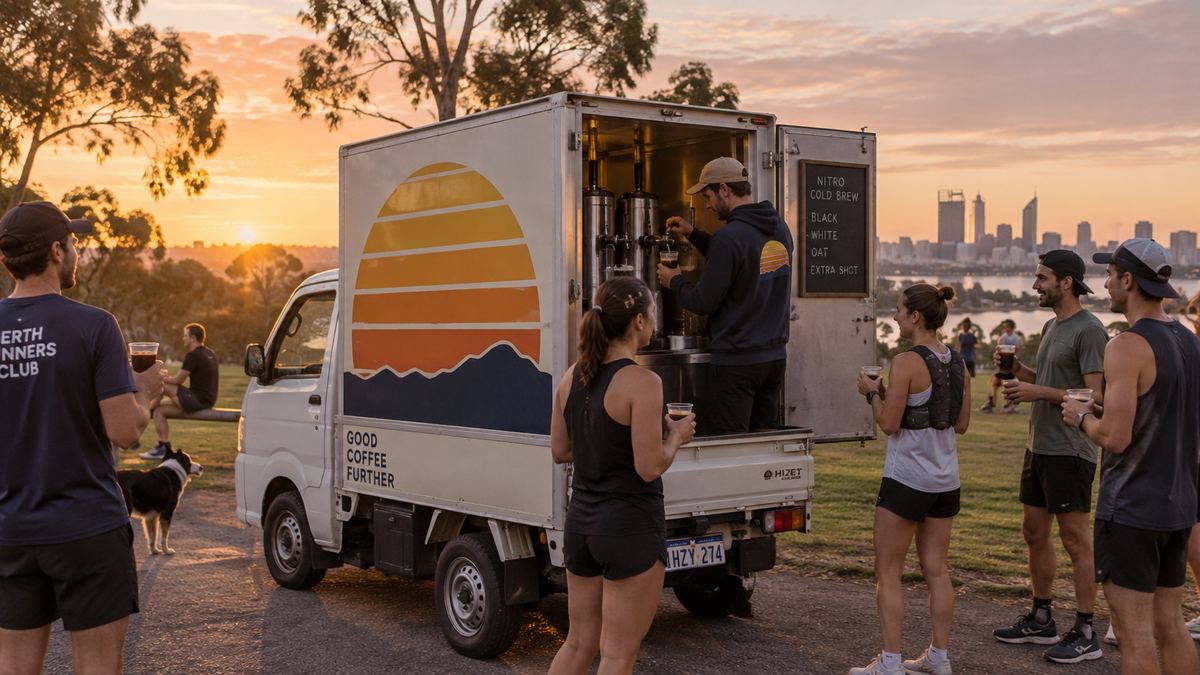
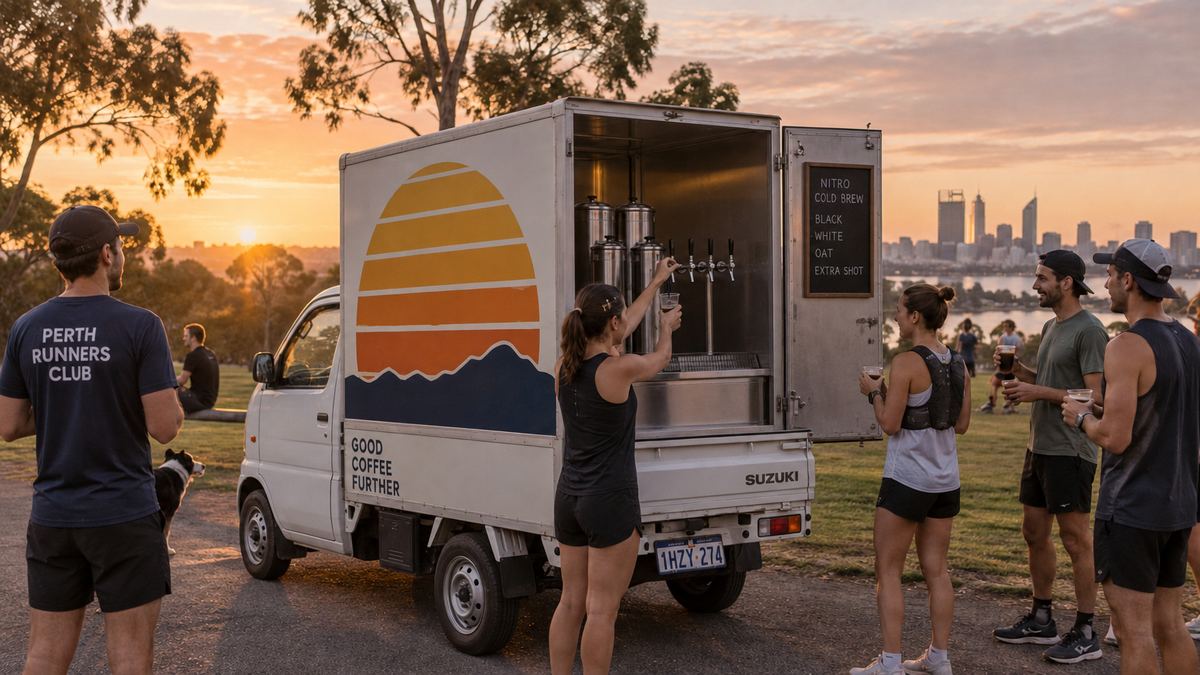
Then three video models animated the same two stills. Veo was retired on Fal by then, so Google's entry was Gemini Omni.
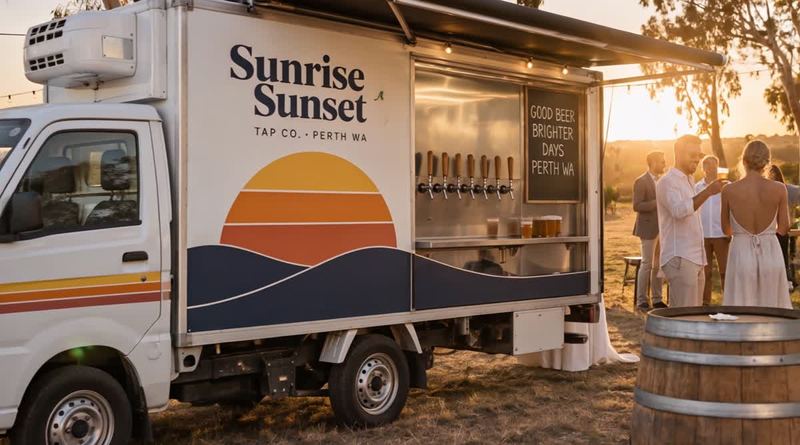
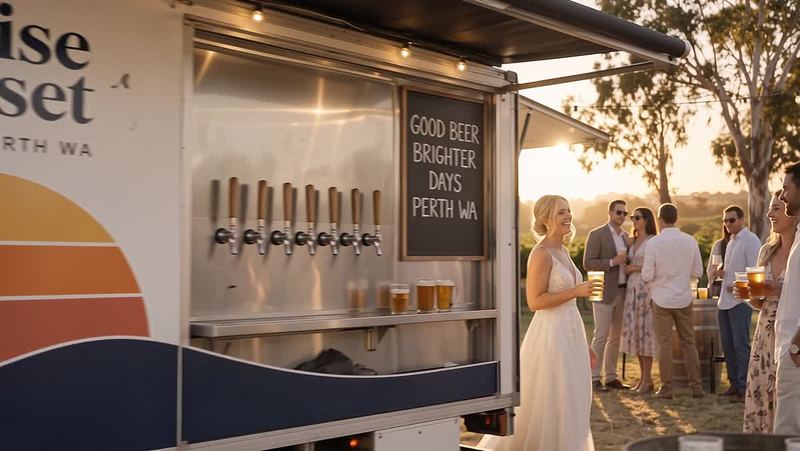
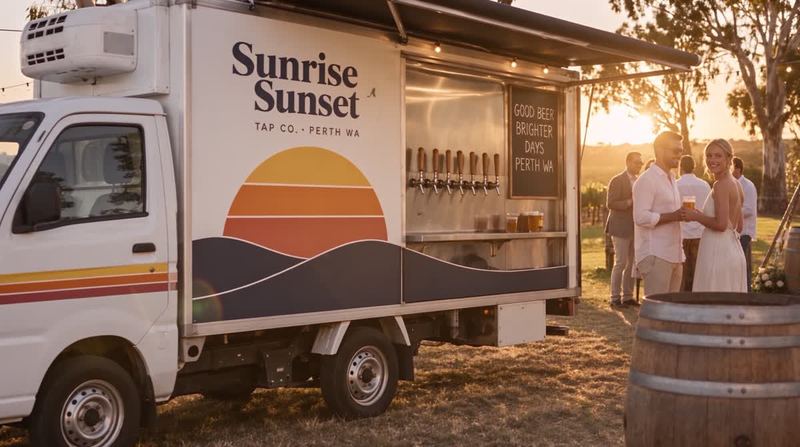
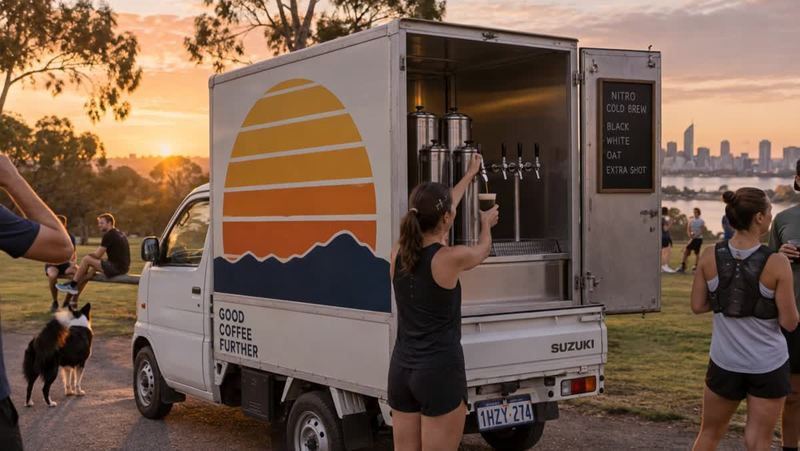

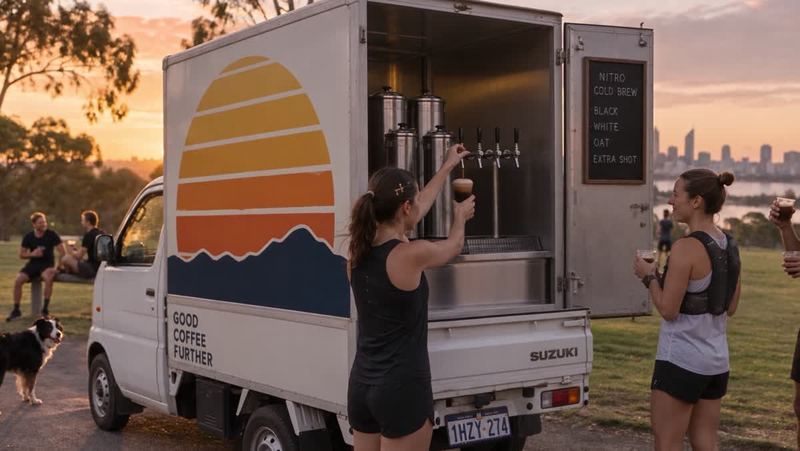
The photoreal clips were retired with the move to Golden Hour. For flat, cut-paper motion Seedance beat Kling: the sun rises cleanly and the festoon lights come on. Video then went on hold until the stills were right. The third round of stills went to A2 for the hero and B1 for the truck.

The Seedance loops came back soft, at 0.24 Mbps. Topaz Starlight Precise 2.6 at 1x restored them without changing the approved motion (#13).
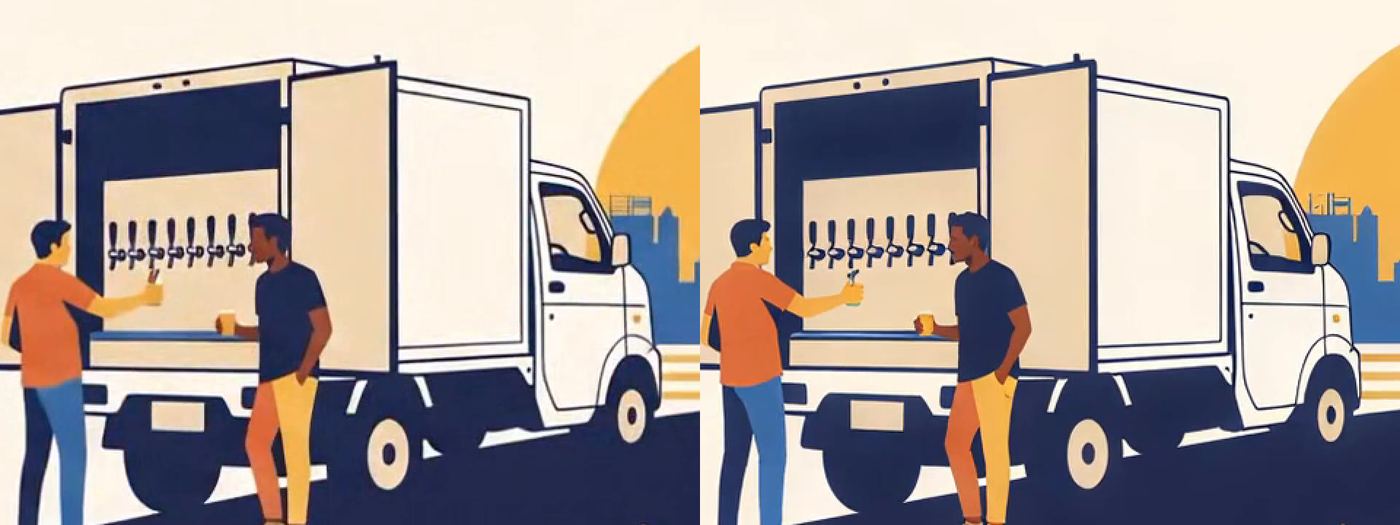
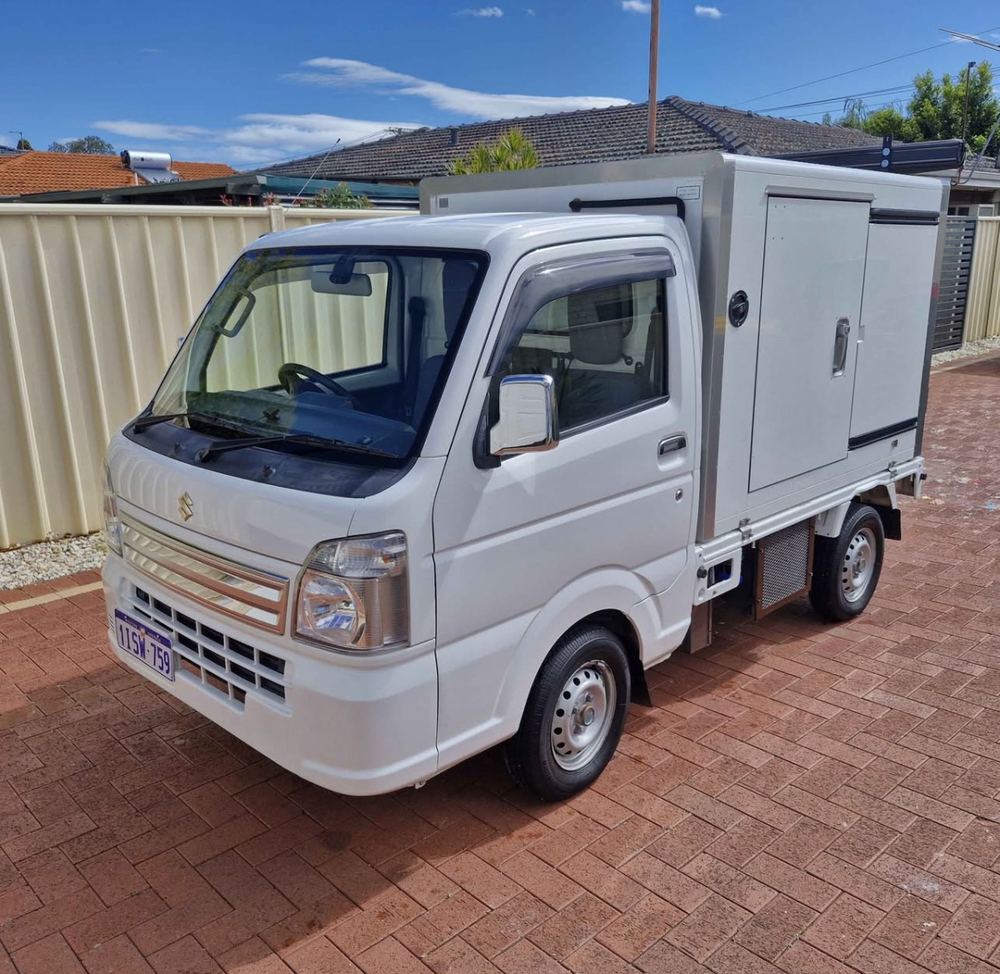
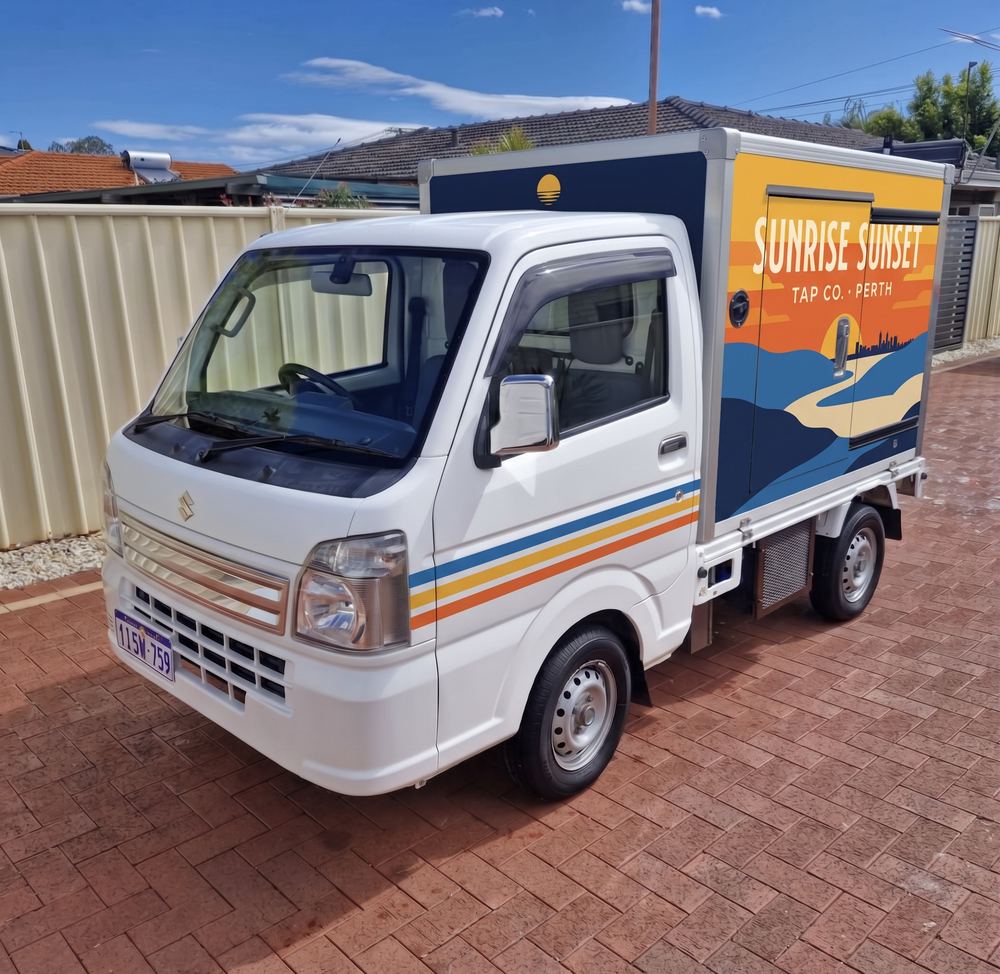
Two models also tried the Golden Hour poster, and the business plan got the seller's Marketplace photo with the wrap edited on.


How the system grew
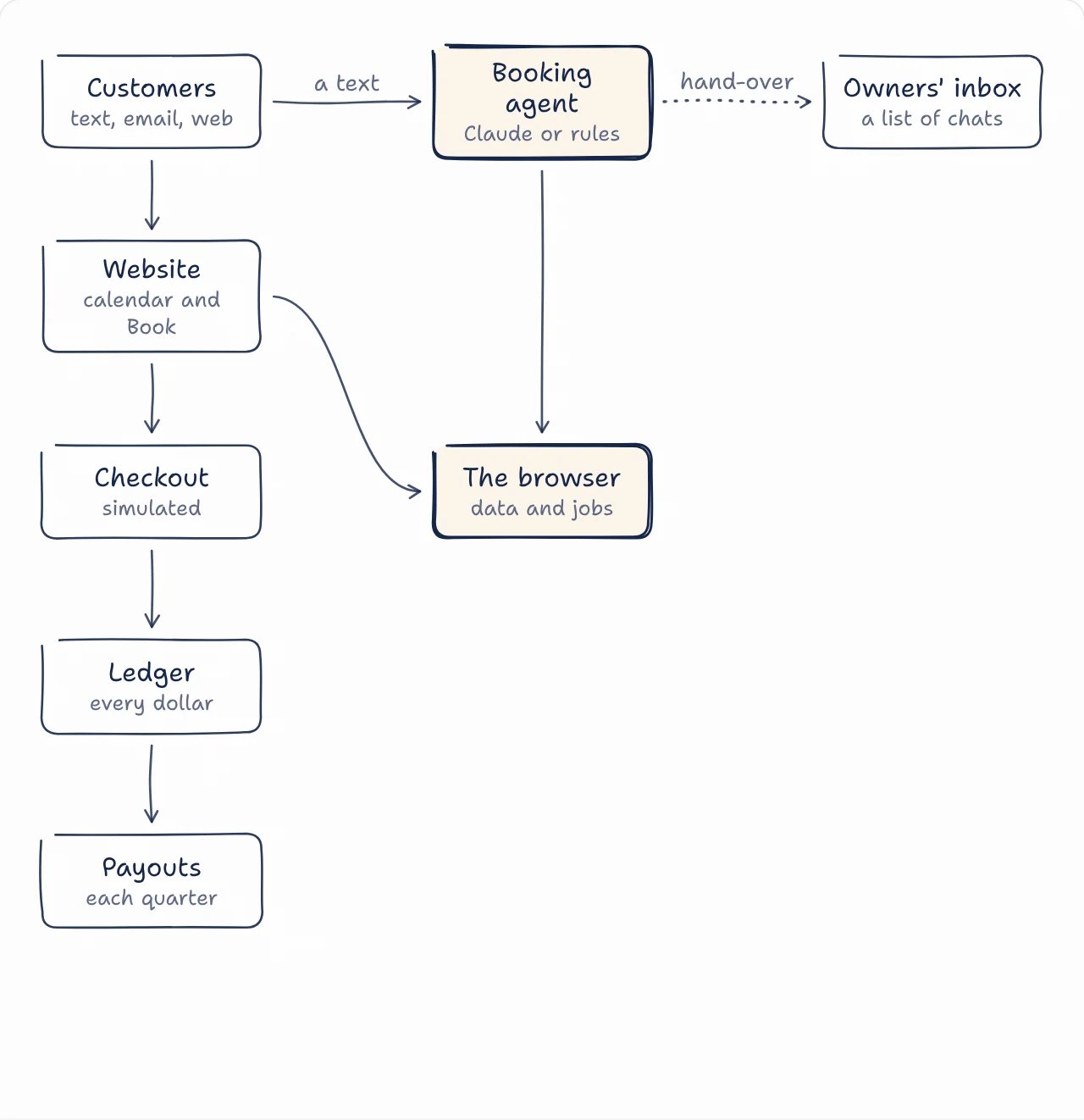
The first build already did a lot. Each later step added a part, or took one away. On the left, the first build: everything lives in the browser, and the browser runs the jobs. On the right, after the last pull request: data in Postgres, signed texts, owner sign-in and approvals, with the retired parts struck out.
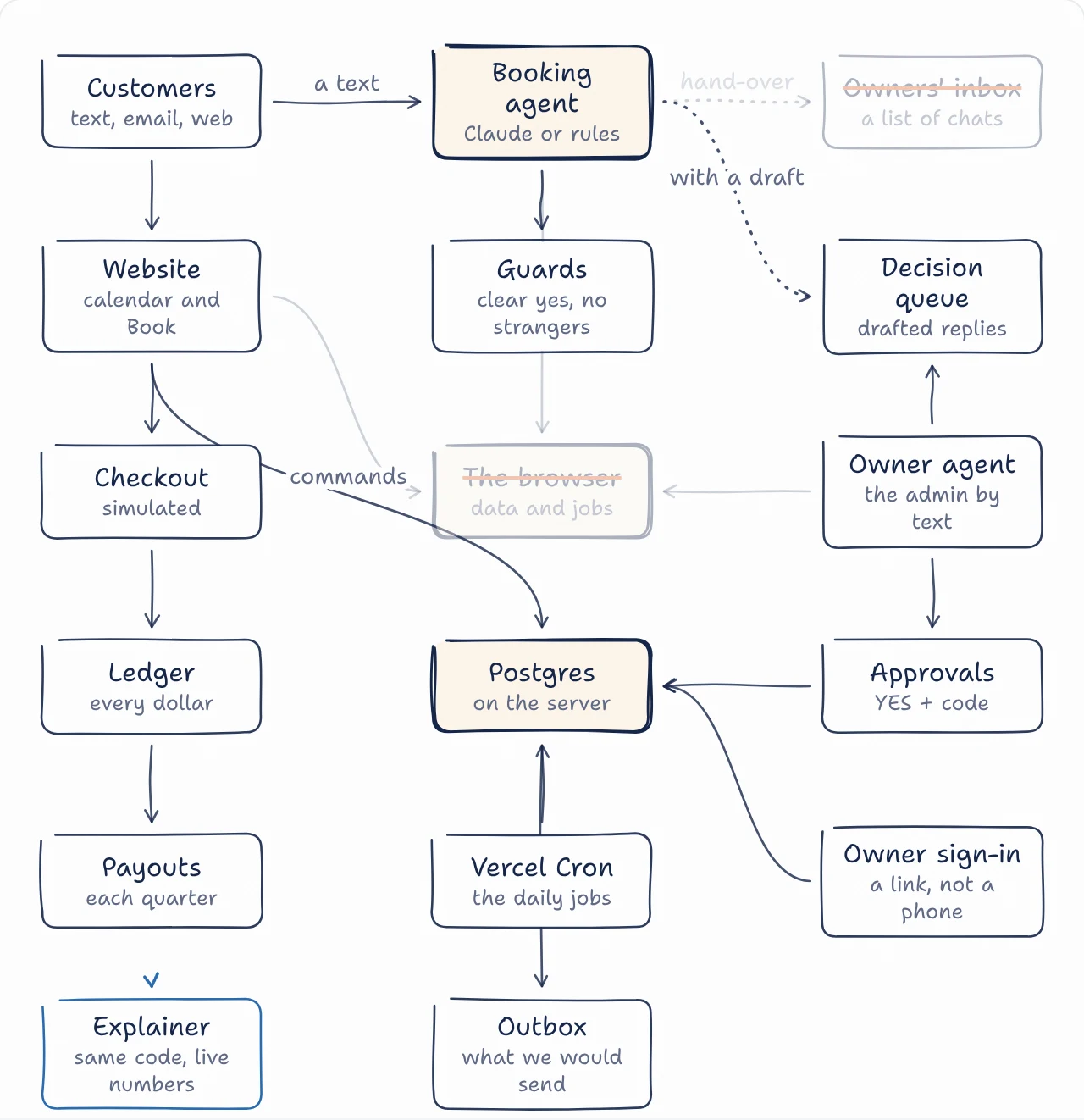
The tests grew with it. There were none on the first build.
The test suite as each pull request merged
None on the first build
The biggest pull requests
Lines added and removed, from GitHub
Hardening
On 23 October the goal changed: the agent and booking system should be production grade and bulletproof, and built so it could serve other businesses later. A demo for other businesses stayed out of scope.
So the system was attacked first. A red team ran on my Mac through /counselors, with three models from three labs reading the code on their own. They found 3 critical and 12 high problems. The three critical ones, in plain words:
- The server believed the browser. The data lived in the browser, so anyone could edit it.
- A phone number was an owner's password. A faked caller ID got the owner agent.
- A stranger could take over a booking by quoting its reference.
The fix plan went through 5 reviewers, who raised 33 findings and 13 corrections to the plan itself. Then two pull requests:
- #19, phase 1: six quick units in an afternoon. A cancel needs a clear yes to a quote, a stranger's reference gets no details, and money settings move to the admin. Each attack it covers was run 3 times before and after: it now fails every time.
- #20, phase 2: nine units, 12,572 lines added across 99 files. Data on the server in Postgres, texts signed the way Twilio signs them, owners signed in by a one-time link, every owner change staged and run only on YES with a code, and the jobs on Vercel Cron. Midway came the point that "we built our own auth". Three models reviewed it and found 17 holes, all fixed before merge. 8 attacks fail, and the 16 owner flows pass.
Before #20 merged, Fable reviewed the database migrations and the fixes went in the same PR. A deploy now migrates its own database before the new code goes live.
Decisions
These are the calls I made, in the threads and on the cards and artifacts the threads sent. An override means the pick went against the recommendation. That happened 5 times. Every other card went with the default, and the rest were decided without being asked.
29 decisions, 17 of them on a card
5 went against the recommendation
| When | Question | Pick |
|---|---|---|
| 22 Oct 09:52 | The name | Sunrise Sunset Tap Co. |
| 22 Oct 10:12 | Buy the domain now? | Buy nothing and set up nothing yet overrideRecommended: Buy the domain |
| 22 Oct 10:38 | Where to put the demo | Deploy to a vercel.app address |
| 22 Oct 11:21 | Golden Hour or Hill Repeats | Golden Hour for the site, Hill Repeats for the admin overrideRecommended: A, Golden Hour |
| 22 Oct 11:41 | More video now? | Put all video on hold |
| 22 Oct 12:55 | Who can approve a payout | Every owner is a director overrideRecommended: Three directors |
| 22 Oct 12:55 | Texts the site promises but never sends | Cut the lines overrideRecommended: Simulate them |
| 22 Oct 12:55 | The other 9 judgement calls | Defaults: 7 days' notice, 11 pm finish, one hire a day, money held until the hire, runner fees paid quarterly, retry a failed balance for 3 days |
| 22 Oct 14:46 | Stills first, or stills and video together? | Stills only, then video once they are approved |
| 22 Oct 14:46 | What the hero shows | No runners in the hero, 8 taps on the rear |
| 22 Oct 15:20 | Which stills | A2 for the hero, B1 for the truck |
| 22 Oct 17:20 | Ticket, Hand-cut or Luggage label | Hand-cut overrideRecommended: Ticket |
| 22 Oct 21:11 | The site's chat button | "Chat", which opens the SMS demo. No web chat. |
| 22 Oct 21:42 | Play and pause on the loops | Remove it, and accept the WCAG 2.2.2 miss |
| 22 Oct 21:51 | Wrap the Marketplace photos for the plan (about $2) | Go |
| 22 Oct 22:31 | Inbox: tidy, split or queue | C, a decision queue with drafted replies |
| 22 Oct 23:06 | How to fix the soft loops | Topaz Starlight Precise 2.6 (about $1.70) |
| 23 Oct 12:55 | Share image | Option A, the logo on the hero |
| 23 Oct 14:10 | Font for the white admin | Geist |
| 23 Oct 14:27 | White console or Hill Repeats admin | The white console |
| 23 Oct 14:48 | The design reviews' findings | Accept every recommendation |
| 23 Oct 15:28 | Font for the diagrams | Shantell Sans, for diagrams and margin notes only |
| 23 Oct 16:32 | How the explainer talks about owners | Never state how many. The byline says "For review". |
| 23 Oct 16:38 | Search engines | Keep the demo out of search until a real domain |
| 23 Oct 17:09 | How good the system has to be | Production grade, built so it could serve other businesses later |
| 23 Oct 18:22 | A demo for other businesses | Out of scope, and out of the business plan |
| 23 Oct 18:24 | Effort per unit of work | Extra High for the hard units, Medium for the small ones |
| 23 Oct 23:36 | Hosted Postgres | Neon, not Supabase |
| 24 Oct 09:51 | Database set-up | Neon in Sydney, Neon Auth off |
The business rules came first, from three rounds of questions on the first morning. They are still the rules the code runs on:
- A Pty Ltd, and every owner is a director.
- Dry hire: the client buys the drinks, we bring the truck.
- No staff. Owners run deliveries and are paid a runner fee for each.
- 4 or 8 hours, a deposit now, the balance before, a bond hold.
- A travel fee more than an hour from the Perth CBD.
- 7 days' notice, up to 6 months ahead, one hire a day, done by 11 pm.
- More than 30 days out, a full refund. Inside 30, the deposit is kept.
- A paid booking beats an owner's own use.
- Payouts each quarter. Every owner sees everything.
- The agent may confirm a booking and take payment by text.
- Texts first, then email, phone and the web form. No web chat.
- Glassware included, no add-ons.
The artifacts carried decisions too. In the copy deck six edits came back: Perth metro, delivery from the Perth CBD and a dry-hire voice (#4). The business plan was edited in place. Every recommendation in the two design reviews was accepted, and my answer to the red team was "plan the fixes".
What worked
- One thread per job. Threads ran in parallel without stepping on each other, and each ended in one PR that was easy to read.
- A default on every question. Work never waited for an answer, and 24 of 29 calls went with the default or needed no card.
- Reviews by other models. Each review found things the builder missed. The red team found the three that mattered most.
- Say what is wrong. "Feels AI generated" and "too playful" each led to a better look within hours.
- Cost first. After the Fal overrun, an estimate before each batch kept spend to a few dollars a round.
The making of the making of
The original write-up was part of the build too. It was made the same way as everything above it: one thread, one pull request (#21) and rounds of review. So it was a dream inside a dream: the truck, then the demo and its explainer, then the page about them, then a section about the page, asked for at 10:18 pm on 24 October while the third round of the page was being built.
The levels leak into each other. The timeline has a bar for the write-up's own thread, and it stops where its data was taken. The token chart counts that thread, and counting it cost tokens. The decisions table doesn't list the decisions about the page, because that would be level 5.
The top is still spinning.